Showing posts with label Technology. Show all posts

Saturday, March 13, 2010

Goodbye Google.cn

It sounds as if there are no more compromises and that the end of Google.cn is imminent.

From The Financial Times:

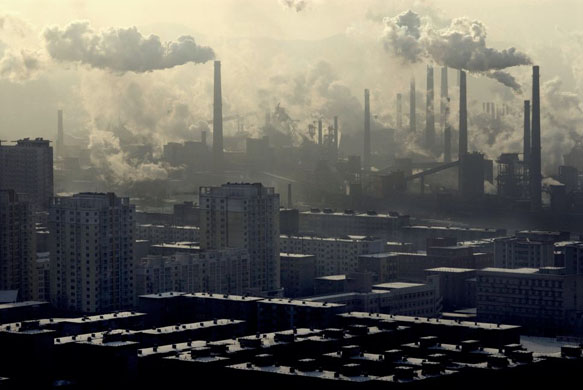
Image from The New York Times

Google has drawn up detailed plans for the closure of its Chinese search engine and is now “99.9 per cent” certain to go ahead as talks over censorship with the Chinese authorities have reached an apparent impasse, according to a person familiar with the company’s thinking.

In a hardening of positions on both sides, the Chinese government also on Friday threw down a direct public challenge to the US search company, with a warning that it was not prepared to compromise on internet censorship to stop Google leaving.

The signs that Google was on the brink of closing Google.cn, its local search service in China, came two months after it promised to stop bowing to censorship there. But while a decision could be made very soon, the company is likely to take some time to follow through with the plan as it seeks an orderly closure and takes steps to protect local employees from retaliation by the authorities, the person familiar with its position said.

Google is also seeking ways to keep its other operations in China going, although some executives fear that a backlash from the Chinese authorities could make it almost impossible to keep a presence in the country.

Read On
This is a sad story.

Ultimately, Google is doing the right thing. In the past, I've thought that a watered-down Google is better for China than no Google at all. But my opinion on that has changed. China is going to be worse off for not having Google, but given the standoff that occurred in January, I'm happy that Google is taking a stand.

Li Yizhong, the minister for industry and information technology in China, said the following in the article above:
“If [Google] takes steps that violate Chinese laws, that would be unfriendly, that would be irresponsible, and they would have to bear the consequences.”

...

“[Google] has taken 30 per cent of the Chinese search market.

“If you don’t leave, China will welcome that, if you don’t leave, it will be beneficial for the development of the internet in China.”
No, it won't be beneficial for the development of China's internet. The more than western companies kowtow to China, the worse China's internet will be. Foreign internet companies that can act as a pull in the direction of more freedom will in fact be the ones "beneficial to the development of the internet is China."

I understand China's desire for "status quo" and "stability." Yes, the country is transforming quickly. Yes, there are a number of volatile issues within Chinese society. But draconian rules halting the flow of information are silly and childish.

The internet flattens the world. It opens up information that would otherwise be unavailable. It connects people throughout the globe that would otherwise not have the ability to communicate.

Google is the ultimate expression of the internet, organizing the mountains of information out there for users to make sense of. An uncensored Google is not evil. It is beautiful. It's a shame that Chinese people may not have access to this wonderful tool going forward.

From what I understand, Google.cn will go offline and Google's offices in China are about to shut their doors. I'm curious about Gmail and, the international version, Google.com though. I have to imagine that those sites will suffer the fate of Facebook, Blogspot, Twitter, and the whole lot of other blocked sites in China.

Sunday, January 3, 2010

High-Speed Train Development

China's transportation infrastructure is getting a significant upgrade.

From National Pulic Radio:

Workers are putting the finishing touches on a French-designed, glass-and-steel train station on the fringes of Wuhan, a major metropolis on the middle reaches of the Yangtze River in China.

Inside, the mostly middle-class passengers line up to board the high-speed train. It takes just three hours to cover the more than 600 miles to Guangzhou, China's third-largest city, in the heart of the industrialized Pearl River Delta. That's 10 hours less than the conventional train takes.

While the United States has allocated $13 billion for the construction of high-speed rail over the next five years, China plans to spend $300 billion in the next decade to build the world's most extensive and advanced high-speed rail network.

In the first-class section of the train to Guangzhou, where tickets cost upwards of $100 — almost double the price of second-class seats — real estate company manager Yang Tao and his wife have swiveled the seats in front of them around and put their feet up. He says he's willing to pay extra for a comfortable ride.

"My wife is afraid of flying," he says with a chuckle. "Taking this train is more convenient than going to the airport, with all the security checks. The flights are often delayed and the airlines' attitude is arrogant."

Onboard video screens show off the train's advanced features. In the dining car, passengers eat roast duck gizzards and spicy noodles and watch the terraced fields and factory towns of South China slip past their windows at speeds averaging around 220 mph.

By 2012, China plans to have almost three dozen high-speed rail lines crisscrossing the country. Nearly 130,000 workers are now building the Beijing-to-Shanghai line, which at $32 billion will be China's most expensive construction project ever. The frenzy of construction is at the heart of China's massive fiscal stimulus to revive the economy.

Read On
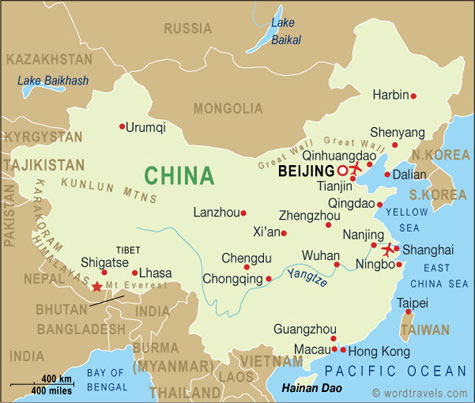
Wuhan and Guangzhou are not close to each other. At all.


Image from worldtravels.com

There is a high speed train in development between Xi'an and Beijing. The thirteen hour trip will be three or four after the train is built.

This high-speed train development is great. Chinese trains are so crowded now. Adding high-speed trains onto the already running trains is going to make train travel much easier throughout the country. Such development will also decrease dependency on air travel.

Reading about this project reminds me of what the film producer Bob Compton said to me a few months ago, "China's stimulus is building while America's is bailing." America, right now, can only dream of such projects (and honestly, most Americans don't even understand the value of getting away from our car culture). China is actually making their ambitious dreams a reality.

Friday, November 13, 2009

Listening to the Chinese

The Obama Administration attempted an interesting public relations experiment yesterday.

From The Wall Street Journal:

Image from Ironicsurrealism.blogvisits.com

China’s bloggers are a focus of organizers of President Barack Obama’s upcoming visit, echoing similar efforts by the administration to use social-media tools to communicate with Americans.

On Thursday, U.S. State Department officials held simultaneous press briefings for a select group of predominantly Chinese bloggers in Beijing, Shanghai and Guangzhou, giving a rundown of the U.S. president’s China schedule and took questions from the bloggers.

The attendee list included many influential bloggers, such as journalist Michael Anti, who blogs about freedom of the press, and Rao Jin, whose Anti-CNN Web site scrutinizes China coverage by the news network and other foreign media.

Read On
This symposium with bloggers, along with the meeting with Chinese youth that Obama (says he) wants to have, is very progressive. Bill Clinton had similar open discussions when he visited China in the 1990s. I like to see Obama trying to connect with Chinese people directly. Based on the general positive things I heard about Bill Clinton, I think that Chinese people appreciate these kinds of gestures and attempts to hear what they have to say.

I hope that the upcoming trip goes well. Even if Obama's domestic numbers aren't as meteoric as they were before, he's still a huge asset to America abroad.

It'll be interesting to see how forceful Obama is in China next week. In the past, democrats have been far more critical of China than republicans. Particularly on human rights, democrats have traditionally been more willing to stir the pot than republicans, who were happy to see China's role as a trading partner expanding.

Like Clinton and Pelosi were earlier this year, I would not expect Obama to cause much trouble. He knows that the US needs China on board right now. I can't imagine that the US can or will be combative or overly ideological right now.

Wednesday, November 4, 2009

iPhone's Meager Launch

There wasn't iPhone hysteria when the product was released a couple days ago.

From Internetnews.com:

Image from Socialmediaeo.com

With this week's launch of the iPhone in China, Apple became the latest foreign company to seek a slice of the country's booming mobile market. But some analysts point to factors endemic in China's wireless market that are growing too large to ignore -- and which could have serious implications for competitors in the space.

Some industry observers had predicted a tepid consumer reaction to the iPhone's debut in China, where it's being sold by carrier partner China Unicom. So far, those early expectations might not be far off: China Unicom has sold only 5,000 units so far, Reuters reported.

Analysts partly blame the high cost of the iconic handset, which retails for about $730 to $1,000 without a contract, and because of the fact that it's been stripped of Wi-Fi to comply with government regulations.

However, they've also pointed to another factor playing a huge role in Apple's (NASDAQ: AAPL) aspirations for China: The country's vast gray-market mobile phone business, which research firm iSuppli dubbed the nation's "dirty little secret."

Gray-market (define) handsets are made or sold outside authorized channels, enabling their sellers to avoid value-added taxes and government regulation, and other oversight, like quality assurance testing.

Read On
While "gray markets" may have an influence on Apple's struggles, black markets certainly do as well. A few months ago I wrote about the "Mobile Shanzhai" and the vast availability of counterfeit cellular phones (including the "hiPhone" Apple knock-off).

In addition to off-color markets, Apple simply isn't that popular in China yet. Most of my Chinese friends who saw my MacBook laptop were perplexed by a computer running without Windows. Windows, like it is for a lot of people in the States, is the only thing nearly all Chinese people have ever had any experience with. This unfamiliarity with Apple has to make the expensive iPhone an even harder sell for Chinese people.

I would think (and hope) that Apple's market will grow in China like it has in America. Whereas five years ago I had never actually used an Apple, I now would never even consider going back to a PC. I've never had one problem - either with the hardware or software - with my MacBook. It never crashes and runs fast, smooth, and virus-free. Web-surfing, photo-editing, and more complex stuff like video and music editing are vastly superior on a Mac compared to a PC. And it wasn't that expensive compared to Windows-based notebooks because I bought a refurbished notebook off of Apple's website (something I strongly recommend).

While in Beijing in June, I saw a slick new Apple store in the 三里屯 district. It was the first to open in mainland China. The more people are exposed to genuine Apple products - whether through iPhone, iPod, laptop, or desktop - the more I think they'll come to embrace them.

Friday, October 9, 2009

Opening Up the Digital Great Wall

Rupert Murdoch spoke in China today.

From The Wall St. Journal:


BEIJING—News Corp. Chief Executive Rupert Murdoch urged China's government to allow its media companies to take advantage of the opportunities in new media by addressing copyright piracy and a lack of competition in the domestic market that he said could impede their expansion.

"The digital renaissance offers China an opportunity to exercise leadership," Mr. Murdoch told the World Media Summit in Beijing, hosted by the state-run Xinhua news agency. Alluding to China's "open door" policy that ushered in economic reforms in the late 1970s, Mr. Murdoch said that the government now has a chance to open China's "digital door."

Addressing the same forum, Chinese President Hu Jintao pledged to "continue to make government affairs public, enhance information distribution, safeguard the legitimate rights and interests of foreign news organizations and reporters, and facilitate foreign media coverage of China in accordance with China's laws and regulations."

The three-day World Media Summit, attended by senior officials from several major international media organizations, is part of a broader push by China's state-run media to exert a greater global influence.

Read On
I'm not a fan of Rupert Murdoch. His pioneering work in the corporatizing of the Western news media has been a bad thing. And his work with Roger Ailes at Fox News is an absolute disgrace.

Saying that, I like what he said to Chinese leaders' faces. I agree with him that the opportunity for them to be taken seriously is theirs. Murdoch, no doubt, has his eyes on China and getting into its market. He's just had serious trouble getting anywhere with his efforts.

Interestingly, Murdoch, at this conference in Beijing, also took serious shots at places like Mark's China Blog:
He (Murdoch) blasted media companies that have refused to charge money for their content, and those that have taken advantage of free content on the Internet. "The Philistine phase of the digital age is almost over. The aggregators and the plagiarists will soon have to pay a price for the co-opting of our content," Mr. Murdoch said. "But if we do not take advantage of the current movement toward paid-for content, it will be the content creators, the people in this hall, who will pay the ultimate price and the content kleptomaniacs will triumph."
I'm amused that Murdoch thinks I'm an anti-intellectual.

Wednesday, September 16, 2009

Internet Access, Climate Calamity, and Politicking

It's been a while since I've had the time to sit down, type "China" into Google News, and read about what's going on in the country. Maybe it's because I haven't been online in a while, but I was really intrigued by a number of articles today.

First, an article from the Los Angeles Times on the newest of China's netizens - low-paid workers:

Image from nataliebehring.com

Reporting from Shenzhen, China - When Jiang Dabao lost a hand to a molding machine three years ago, his boss said he wasn't eligible for workers' compensation. Unemployable, Jiang whiled away his days in the Internet bars that thrive in China's manufacturing heartland.

Eventually he tapped into QQ, a popular social networking service, where he found a worker advocacy group that helped him win a $30,000 settlement, said Jiang, who identified himself by his childhood nickname for fear of official reprisal.

Forums have become the Chinese proletariat's equivalent of Facebook or Twitter and are seen by some as the beginnings of a labor movement.

Authorities and factory owners are eyeing the networks warily. Sites dedicated to grievances have been shut down, and stories about worker rallies are regularly deleted, according to labor advocates. The QQ forums are capped at 100 users, making mass mobilization more difficult.

Still, the potential remains for groups to organize through social networking.

Authorities alleged that exiled separatists used the Internet to urge ethnic Uighurs to riot in China's western Xinjiang province in July; the government cut Web access in the region for days.

"Nobody can predict when the Chinese working class will have uproar. It may be once in a lifetime, but if it happens, it will change everything," said Jack Qiu, a professor at the Chinese University of Hong Kong who follows the Internet in China.

Until a few years ago, factory workers missed out on the Internet boom. But that changed with the explosion of Internet cafes and cheap cellphones that enabled users to go online.

Read On
It's great that new technology is giving the bottom rung of China's society the opportunity to get online. China is going to continue to clamp down on its country's internet as much as possible. But I like to think that the more people that get online and get used to having a voice the better. It'll be harder for the powers that be in China to restrict people the longer people are used to having the ability to enjoy some degree of freedom online.

Second, an article from AP on the future of climate change:

Image from The Guardian

BEIJING — If China's economy continues to expand rapidly and rely heavily on coal and other fossil fuels until the middle of the century, its power demands could exceed what the entire planet can withstand, according to a study by government think tanks released Wednesday.

The two-year study, supported by the U.S.-based Energy Foundation and the international environmental group WWF, also said if China's energy usage structure remains unchanged, its emissions of greenhouse gases blamed for global warming would reach 17 billion tons a year by 2050. That would represent 60 percent of total global emissions and three times China's current production, it said.

"If the current mode of economic development drags on, the scale of China's fossil fuel consumption will be shocking," said the study, titled "China's Low Carbon Development Pathways by 2050."

The researchers said global warming will challenge China more than many other countries, with its developed east coast cities contending with rising sea levels, and already drought-prone agricultural areas suffering further water shortages.

Read On

I've talked before about the contradiction/irony/tragedy of climate change. The West has been developing and industrializing for two hundred years, yet now it is China's recent growth that may very well push the world past the brink. The West been enjoying the fruits of industrialization for generations, yet now that China is getting there, there's a climate crisis and they can't use (is pillage more appropriate?) the Earth in the same way already industrialized nations have.

I'm not saying that China shouldn't change or that the West is evil or anything. I just think the whole situation is pretty interesting when broken down.

Third, an article from Asia Sentinel on the things being discussed at China's annual CCP Plenum:


While most plenary sessions of the Chinese Communist Party's Central Committee – usually held once a year – merely endorse decisions made by the supreme Politburo Standing Committee, the plenum now taking place in Beijing deserves special attention.

Party insiders say Vice-President Xi Jinping, 56, may be promoted to the vice-chairmanship of the CCP's Central Military Commission. This will not only confirm Xi's status as Hu's successor as party general secretary and state president, but also spell a bonanza to the political fortune of the "Gang of Princelings" – the offspring of party elders – that Xi heads.

Xi, the son of former vice-premier Xi Zhongxun, does not come from the Communist Youth League faction led by President Hu Jintao. And Hu, who has been military commission chairman since 2004, has maneuvered to delay Xi's induction to the policy-setting military organ. One reason is that while the princelings are heavily represented in the top echelons of the People's Liberation Army, very few youth league affiliates have attained senior ranks in the defense forces.

Within the standing committee put together at the 17th Party Congress in late 2007, Xi outranks long-time Hu protégé Li Keqiang, who as First Vice-Premier is expected to take over from Wen Jiabao as premier in 2013. It is understood, however, that Hu has hoped to delay Xi's induction to the military commission so as to allow Li, a former party boss of the Youth League, time to build up a power base at the top.

However, recent events in Xinjiang, in which more than 200 people were killed in ethnic violence since early July, have dealt a blow to the Youth League faction. The bulk of the top cadres running Xinjiang and Tibet, including their party secretaries, respectively Wang Lequan and Zhang Qingli, are veteran youth League affiliates.

Read On
I have a hard time getting excited about Chinese politics. But succession debates and possible grabs for power at the top are always gripping theater.

Given how chaotic things have been for China recently (really for a couple years now), I'm not surprised that a serious look at what's going on with China's power structure is happening. I wouldn't think that the upheaval and general "disharmony" that's taken place over the past couple years in the Middle Kingdom is sustainable.

Well, this coffee-induced news round-up has been fun!

Saturday, September 5, 2009

The Non-Anonymous Internet

The powers that be in China are not appreciating that anonymity that the internet allows.

From The New York Times:

Image from xyberlog.com

BEIJING — News Web sites in China, complying with secret government orders, are requiring that new users log on under their true identities to post comments, a shift in policy that the country’s Internet users and media have fiercely opposed in the past.

Until recently, users could weigh in on news items on many of the affected sites more anonymously, often without registering at all, though the sites were obligated to screen all posts, and the posts could still be traced via Internet protocol addresses.

But in early August, without notification of a change, news portals like Sina, Netease, Sohu and scores of other sites began asking unregistered users to sign in under their real names and identification numbers, said top editors at two of the major portals affected. A Sina staff member also confirmed the change.

The editors said the sites were putting into effect a confidential directive issued in late July by the State Council Information Office, one of the main government bodies responsible for supervising the Internet in China.

The new step is not foolproof, the editors acknowledged. It was possible for a reporter to register successfully on several major sites under falsified names and ID and cellphone numbers.

But the requirement adds a critical new layer of surveillance to mainstream sites in China, which were already heavily policed. Further regulations of the same nature also appeared to be in the pipeline.

Read On
I've been too forgiving in the past towards China's locking down of the internet. China has no interest in keeping its internet open and a genuine sharing of information. This can be evidenced the blocking of YouTube, Twitter, Blogspot, and a number of other sites as well as this move. It's really sad China is locking things down considering how many benefits the internet has already given the country.

Now that I've left China, I'm really appreciating the freedom of expression we have in America. America has its own set of issues across the board, but at least I can go to websites that I want to and don't have to be self-regulating when speaking about politics (in China, you've always got to be aware of avoiding "the 3 T's.")

Sure, religion and politics are things that are probably better not discussed in America. But at least there's no chance of becoming an enemy of the state for questioning authority or speaking one's mind about such topics.

Tuesday, July 21, 2009

Rewarding Pirating?

A columnist at PC World is confused and upset as to why China gets ridiculously cheap copies of Microsoft Office.

From PC World:

Image from johannes-eva.net

In order to take a bite out of piracy, Microsoft sells copies of its Office Suite in China for just $29 dollars. I wonder how many copies Americans would have to pirate to get the same price? So much for the notion that "crime does not pay!"

I found the pricing information earlier today in a BusinessWeek story about how Microsoft is slashing prices to grab market share and fight off Google and the others that are giving away functionality Microsoft customers are used to paying for.

The magazine said Microsoft estimates 95 percent of all copies of Office used in China are illegal copies. Since the $29 pricing started in September, sales of Office have supposedly increased 800 percent.

This looks like a case of where crime pays big dividends. And, no, I am not suggesting for readers to pirate copies of Office in order to send Redmond a pricing message.

Still, we Westerners have been paying through the nose for Office for almost two decades. If anyone deserves a price break, it's us--not the thieving Chinese. But, it seems that if you are a fast-growing market, lawlessness aside, Microsoft wants to cut you a deal.

I understand what Microsoft is doing and why. I am happy for anything that reduces software theft, but that doesn't make me nearly as happy as a $29 copy of Office would.


Read On
The full version of Microsoft Office 2007 on Amazon.com costs $290.49 (while the home and student version costs $89.99. I just read the original Business Week article. I couldn't tell whether the $29 version in China is the full version. But even if it isn't, this is a huge price break for the Chinese.

I can see why this remarkable discrepancy in price would be frustrating for American users of Microsoft Office. It does, in some sense, seem to be rewarding pirating software.

I'm tempted to bring up the differences in cost of living between the two countries (ie. things are more expensive in America than in China), but really, when it comes to computers and high-tech stuff, the prices are pretty much the same. In fact, a lot of techie items, from my experience, are more expensive in China than in America.

The most obvious solution to this wide gap in prices is for Microsoft to significantly lower its prices in America. Given new challenges from Google, open source word processors, and surely many more challengers to the Office platform, I would have to imagine that in five years, a newest version of Microsoft Office will not cost $300.

Friday, June 19, 2009

Getting Google In Line

In a continuation of sorts from yesterday's "Building Walls," China is ramping up the pressure on Google and its "vulgar" searches.

From The Financial Times:

Image from Gordonchoi.com

China has ordered Google to suspend part of its search operations on its local website, in a show of force which could disrupt the company’s growth in the country and underscores the political risks of operating in China.

State media said on Friday that the authorities had “punished” Google China for linking to pornographic content. On Thursday, in a “law enforcement talk”, the government announced that Google China would be punished with orders to suspend foreign webpage searches and automated keywords, Xinhua, the official news agency, and China Central Television, the main state broadcaster, said.

Google confirmed that it met with government representatives “to discuss problems with the Google.cn service and its serving of pornographic images and content based on foreign language searches.” The company added that it was undertaking a thorough review of its service and said it believed it had addressed the large majority of the problem results.

...

The government has been clamping down on various internet sites for months in the name of a campaign against ‘vulgar’ online content. But on Thursday, the authorities took the unusual step of accusing only Google of allowing links to lurid content, although similar content was easily found through Baidu, its local rival which holds 59 per cent market share.

“If these restrictions are kept up for more than a few days, they will have a huge impact on Google’s business in China,” said Edward Yu, chief executive of Analysys, an internet research firm in Beijing.


Read On
China's been acting funny recently. This latest push-back against Google coupled with the Green Dam self-censoring computer project has me worried about the direction the Chinese internet is going.

Today's Google episode seems to be coming out of thin air. The vulgar content charge is spurious at best. As the article pointed out, similar content to Google's came up on searches of Baidu, China's largest, home-grown search engine.

This dispute with Google is surely being viewed as an opportunity to both restrict the flow of information and berate of a foreign company. A win-win indeed!

Tuesday, June 16, 2009

Subtitling TV and Movies for the Masses

Every single western TV show or movie available to the Chinese masses on the internet has the Chinese translation of the program at the bottom of the screen. For some time now, I've been wondering who comes up with this ubiquitous text. I just found out the answer.

From CNN (H/T to The Peking Duck's Twitter page):

Photo from Daylife.com

SHANGHAI, China (CNN) -- On Saturday at 10 a.m. it's show time for Brenda Zhang and her subtitle team. They roll out of bed, meet each other online and chat, while their modems download the latest episode of "Prison Break," which just aired half a world away on Friday night in America.

Once they have the show on their hard drives, the team spends the rest of the day creating subtitles for it in Chinese before putting it back online for other fans to watch.

Dozens of such groups exist in China. They are voluntary and are translating a mix of media, from books and magazines to games, TV shows and movies. The translated products are for an audience whose primary means of accessing foreign entertainment is the Internet.

The members of these online translations groups participate out of a desire to improve their English. For many there is also a passionate interest in overseas content and a desire to make it accessible to other Chinese people.

"This is a way to fulfill your life and do something you are interested in," said Zhang, a 24-year-old who translates for a team that calls themselves "Showfa."

"I think Chinese people need to know something different, to see how the foreigners think about life, think about love."


Read On
These people who do these translations are committed to their hobby. I can't exactly understand why they care so much given that they don't make any money off of what they do. But then again, I spend time on this here blog every day and I don't make any money on it. So I guess I can see why they do what they do.

The article says that there is a strict application process for being accepted into these groups. One member of the 1000fr group said "she had to translate 300 words in 15 minutes." These standards, translating words (probably with no context), surely explains why most of the translations are so awful.

When watching these Chinese subtitled programs, I can recognize a lot of the characters flowing across the bottom of the screen. It's hard for me to say whether what I'm kind of understanding gels with the English going on on the screen though. But Qian often (actually more often than not) has something to say about how terrible the translations are. She usually turns them off or switches it to the English translation, if possible.

The translations don't cut it for Qian, who has really good English. But it obviously works for the majority of Chinese people, who aren't proficient in English.

Whatever one thinks about the quality of these translators' work, there's no questioning their quantity.

As the article states, shows are turned over often within hours of their showing. If "24" is on on Tuesday night in America, you'll most likely be able to find it on the 'net in China by Wednesday (remember, China is twelve hours ahead of the US). Being able to watch TV shows as they air lets young Chinese people watch the show at the same rate as those in the States.

From what I've seen and heard, the most popular shows for young Chinese people are "24," "Desperate Housewives," and "Prison Break."

The most popular show during my time in China, by far, has been "Prison Break." I find this amusing since the show isn't particularly popular at all in America. I've watched a bit of it. It's painfully bad. You see pictures of the lead character "Scofield" all over Xi'an selling jeans or whatever. I've heard a lot of Chinese guys tell me how handsome they think Scofield is and lots of girls lament that he's gay in real life. The Prison Break phenomenon in China is indeed a curious one.

In addition to TV shows, American movies with Chinese subtitles across the bottom of the screen are everywhere. I've been impressed with some of the titles available. Both the Darren Aronofsky film "Pi" (I like its translation 死亡密码 - "Death's password?") and the 80's film "Stand by Me" are currently available with Chinese subtitles at PPlive.com. Neither of these movies are that popular in the States. Seeing that they've been translated, the Chinese 'net has just about every movie out there. Go search for whatever you want on PPlive. It's probably on there.

All of this stuff is, of course, illegal. Right now, the powers that be seems to be completely ignoring it though. Whether this culture will continue into the future will be an interesting thing to observe.

Saturday, June 13, 2009

Microsoft's Sickness

Microsoft just launched a new search engine: Bing.

The engine is already causing headaches for Microsoft in China. There aren't any problems about lewd pictures or politically-insensitive content. No, "Bing" is just a stupid name for a Chinese website.

From The Wall St. Journal:
After a brief hiatus last week, software giant Microsoft’s Bing search engine is back online in China.

Microsoft launched a Chinese version of Bing on June 1 at cn.bing.com, marking the first time the company has offered a Web product specifically targeted at the 298 million Web users in mainland China. But unlike its American counterpart (and like many of the other international versions of Bing), Chinese Bing is still a bit of a shell at this point, without all of the handy features that are available on the U.S. search engine.

And in China, Microsoft prefers not to call it “bing,” since that sound can have several meanings in Mandarin, depending on the tone and character associated with it. For example, this word: 病. Pronounced bing (fourth tone), it means “sickness” or “to be ill,” something most people would prefer to avoid. Other “bings” mean ice, soldier and pancake.

The Chinese version has thus been named “biying” (必应) which means “must respond/answer” and which Microsoft is marketing it as a“decision engine”– something that will provide information to assist Internet users with their decision-making processes.


Read On
This is a pretty funny scenario. It reminds me a lot of the classic example of the Chevy Nova trying to be sold in Latin America. In that case, "no va" loosely means can't go. The story I remember is that this naming-flub doomed the car's sales in Spanish-speaking countries.

It turns out that this Nova situation isn't completely true though. I just did a Google search on it and found this article from About.com:
Chances are you've heard about how Chevrolet had problems marketing the Chevy Nova automobile in Latin America. Since no va means "it doesn't go" in Spanish, the oft-repeated story goes, Latin American car buyers shunned the car, forcing Chevrolet to embarrassedly pull the car out of the market.

Chevrolet's woes are often cited as an example of how good intentions can go wrong when it comes to translation. There are literally thousands of references to the incident on the Internet, and the Nova example has been mentioned in textbooks and often comes up during presentations on cultural differences and advertising.

But there's one major problem with the story: it never happened. As a matter of fact, Chevrolet did reasonably well with the Nova in Latin America, even exceeding its sales projections in Venezuela. The story of the Chevy Nova is a classic example of an urban legend, a story that is told and retold so often that it is believed to be true even though it isn't. Like most other urban legends, there is some element of truth in the story (no va indeed means "it doesn't go"), enough truth to keep the story alive. And, like many urban legends, the story has the appeal of showing how the high and mighty can by humiliated by stupid mistakes.


Read On
So maybe the Chevy Nova in Latin America isn't completely analagous here. But it is in the same ballpark.

I'm not sure what Chinese people are going to think of the change from "Bing" to "Biying." The web address is still going to be cn.bing.com, so it's not as if people will be typing "Biying." I could see confusion or mocking of Microsoft over this name.

The Wall St. Journal article also goes on to discuss some other problems with the site. Again, it's not being threatened by the Great Firewall or anything. It's just that it's not a very good site or search engine. And the search market on the Chinese internet is already firmly established. So an inferior product just isn't going to cut it.

I don't really feel sorry for Microsoft blowing a big opportunity here. I haven't been a fan of the company for some time now. I bought a Mac Book a couple years ago and would never consider buying a PC again. Apple OS X is so much better than Windows, in my opinion. In addition to operating systems, Microsoft has also fallen behind with its search (MSN and Bing), its web browser (Internet Explorer), and its email (Hotmail).

Office is still pretty good though. I'll give Microsoft that.

Maybe one day 必应 will be big in China. I doubt it though. It's probably going to, instead, be another symptom of Microsoft's 病.

Friday, June 12, 2009

Tweet Me

If a twit tweets alone in a forest, will any other twatters notice?

I'm trying my best to embrace the latest technology taking over the world: Twitter. I still don't completely get it. But I'm beginning to see the light. A little. I'm going to give Twitter a whirl and see what happens.

If you're interested, my user name is @markvranicar. The link to my profile is here.

Friday, May 8, 2009

.中国

The internet became distinctively more Chinese this past week.

From The People's Daily Online:


The nation-wide popularization campaign for the use of the Chinese-language domain name ".中国 (China)" was launched in Beijing on May 7. People's Daily Online, Xinhuanet.com, Sina.com and QQ.com have taken the lead in registering under the domain name ".中国."

So far, 90 percent of national provincial or ministerial-level government organizations, 95 percent of traditional media websites, over 90 percent of the 211-engineering universities, over 50 percent of China's top 100 enterprises and over 40 percent of China's top 500 enterprises have already registered to use the ".中国" domain name.

It is expected that within the next two years, China's mainstream websites will all be using the ".中国" domain name.


Read On
Who wants to get in on some cyber-squatting with me here?

In the past, I've found it weird that Chinese internet users are forced to use English words and the Latin alphabet to surf Chinese websites.

Let's use Tudou.com as an example. Tudou is "potato" in Chinese. That Chinese people have to use the pinyin of the name isn't right. 土豆.中国 would be more natural for a Chinese person.

In other internet news, China, unsurprisingly, is the world hotbed of spamming.

From Computer World:

Image from The New York Times

It's a great deal, if you're a spammer.

You pay US$700 to use a server in China that lets you send all the spam you like. It's called bulletproof hosting, and to the people who fight spam and cybercrime it's becoming a big problem.

Cybercriminals use these services not just to host servers, but also to register Internet domain names that they use for spam and online attacks. In a three-month period this year, researchers at the University of Alabama at Birmingham traced more than 22,300 domains, all used to send online pharmaceutical spam, to just six bulletproof computers hosted in China, said Gary Warner, director of research in computer forensics at the university.

...

Several dozen bulletproof hosting services operate worldwide, but the "vast majority" of them are in China, Warner said. Even scammers from countries considered soft on spam use the services because they are so reliable, he added. "Even the Russians use the Chinese bulletproof registrars."

The providers are upfront about what their services are used for.

Here's how one company, Tecom, promotes its service: "Usually, your web hosting provider will shut down your web site within days, or even sooner, if they find out you are sending bulk e-mails and directing people to your site on their server. Bullet-Proof Web Hosting helps you to direct customers to your web site, and you won't have to worry about being shut down because of spam complaints."

Read On
The internet is a confusing patchwork of servers and hosts. It's easy to see how it can be exploited and taken advantage of.

The New York Times a few months ago even asked: Do We Need a New Internet?
“Unless we’re willing to rethink today’s Internet,” says Nick McKeown, a Stanford engineer involved in building a new Internet, “we’re just waiting for a series of public catastrophes.”
The logistics of the infrastructure that comprises the 'net is all over my head, but I understand the basic idea that the internet, as it currently stands, could be better organized.

Tuesday, April 28, 2009

Mobile Shanzhai

The Chinese are world-class copy-cats. And they have a strong tradition of counterfeiting too.

From The New York Times:


SHENZHEN, China — The phone’s sleek lines and touch-screen keyboard are unmistakably familiar. So is the logo on the back. But a sales clerk at a sprawling electronic goods market in this Chinese coastal city admits what is clear upon closer inspection: this is not the Apple iPhone; this is the Hi-Phone.

“But it’s just as good,” the clerk says.

Nearby, dozens of other vendors are selling counterfeit Nokia, Motorola and Samsung phones — as well as cheap look-alikes that make no bones about being knockoffs.

“Five years ago, there were no counterfeit phones,” says Xiong Ting, a sales manager at Triquint Semiconductor, a maker of mobile phone parts, while visiting Shenzhen. “You needed a design house. You needed software guys. You needed hardware design. But now, a company with five guys can do it. Within 100 miles of here, you can find all your suppliers.”

Technological advances have allowed hundreds of small Chinese companies, some with as few as 10 employees, to churn out what are known here as shanzhai, or black market, cellphones, often for as little as $20 apiece.

Read On
This part of the NY Times article is great:
So far, however, China has done little to stop the proliferation of fake mobile phones, which are even advertised on late-night television infomercials with pitches like “one-fifth the price, but the same function and look,” or patriotic appeals like “Buy shanzhai to show your love of our country.”
Here is the video that the Times article linked up to:


Love the English in this video.

A couple weeks ago I referenced Peter Hessler's "Rivertown." A truly great book on contemporary China (even if it was written in the late 90s).

There is a fascinating passage from the book where Hessler writes about shanzhai culture in today's society as well as the long-standing tradition it has in China. From page 258 of the book:
The demand for Nalgene-knockoff bottles was much more understandable, especially in a tea-drinking city like Chengdu, where the bottles spread quickly throughout the city's social strata. They were first acquired by cab drivers, who tended to be at the forefront of such trends - cabbies had a certain maverick quality, as well as plenty of money. After that, the businessmen followed suit, and then xiaojies, and finally by summer even the old people in the teahouses were sipping their tea out of fake Nalgene bottles. Soon you could buy them for twenty yuan in any Sichuan city or town.

The bottles came with a label that described them as American-developed Taikong Pingzi - Outer Space Bottles. But they were clearly the product of Chinese factories, because they weren't quite standard and often the label was misspelled. In that regard things hadn't changed greatly from the seventeenth century, when a Spanish priest named Domingo Navarrete described the business methods in China. "The Chinese are very ingenious at imitation," he wrote. "They have imitated to perfection whatsoever they have seen brought out of Europe. In the Province of Canton (Guangdong) they have counterfeited several things so exactly, that they sell them Inland for Goods brought out from Europe."
Some things never change. Modern "Hi-Phones" are just the 21st century manifestation of something that the Chinese have honed for centuries.

I was really surprised to read that the Chinese tradition of copying goods goes back hundreds of years. There really is something long-standing about the Chinese ability to produce high-quality fakes.

This culture of counterfeiting goods passed on through generations is sociologically and anthropologically fascinating to me.

Monday, March 30, 2009

Plastic Surgery Booming

In a strange twist, the economic crisis is actually injecting new demand into China's fledgling plastic surgery industry.

From The Los Angeles Times:


Reporting from Shanghai -- In this crummy job market, Stephanie Yang figures any little advantage will help. Even double eyelids.

So on a cold January morning, the 21-year-old college senior walked into one of dozens of plastic surgery clinics here and plopped down $730, the equivalent of one year's tuition. An hour later she came out with two big bandages over her eyes.
When she removed the dressing the next day, Yang was aghast at her red, puffy eyelids. But now she looks out with her round eyes, a sharp crease across the upper lids, ready for the next interview.

"They may not say it openly, but during the process they will pick the prettier one," she says.

Judging by the boom in plastic surgeries lately, a lot of young Chinese would agree.

In the U.S., the recession has led to a steep drop in cosmetic surgeries, which generally aren't paid for by health insurers. Nose jobs aren't covered in China either, but that's not stopping consumers here. Job hunters know that a pleasing face helps to get a foot in the door.

"I've been surprised how busy it is," says Dr. Liao Yuhua, president of Shanghai Time Plastic Surgery Hospital, one of the largest in the city. Business began to increase last November, she says, and in recent weeks has been running 40% higher than a year ago. At its busiest in January, Liao says, her team of 10 surgeons was doing as many as 100 procedures a day, raising noses, cutting eyelids and chiseling angular faces into the shape of smooth goose eggs.

Read On
As a shorter guy (5'6"), I found this section particularly interesting/disturbing:
No wonder some Chinese pay thousands of dollars to have doctors break their legs and have steel pins inserted in their bones; these surgeries typically add 3 inches to a person's height but are considered very dangerous.
And this part is just insane:
Even for government jobs, applicants are graded for yibiao, or appearance. In one extreme example, Hunan province in central China required that its civil servants have "symmetrical breasts." The policy was scrapped after applicants protested a few years ago.
As an American, I don't really have much room to criticize excessive plastic surgery. But I find it pretty unfortunate that China is going down this path.

The "double eyelid" surgery is an interesting procedure to me. As the owner of double eyelids, I don't exactly see what all of the fuss is about. Of course, I'm not a Chinese woman and am not held to Chinese standards of beauty, so it's not really fair for me to say it's silly.

Here are a couple before-and-after photos of double eyelids operations:


Photos from Drmeronk.com

Double eyelids, white skin, bigger breasts, height - all things that most Chinese woman are deficient of naturally - are the things that Chinese women are obsessing over. One could also say Chinese men are preoccupied over these things too, seeing that they ultimately have a lot to do with defining what beauty is.

It's true that during a down economy and a cut-throat job market, good looks will become more and more important. This is unfortunate. Having genetics, rather than achievement, being the determiner of one's job prospects is a pity. Such is life though and I'd be a fool to think that this will go away any time soon.

As I said earlier, I'm a short guy. So I'm, without a doubt, going to have my job prospects be affected by my appearance. Don't expect me to be commissioning a plastic surgeon to break my legs anytime soon though.

Sunday, March 29, 2009

Cyber Espionage

News that Chinese hackers have infiltrated computers across the globe isn't going to do any favors for China's reputation abroad.

From InfoWorld:

Photo stolen from some religious right-wing hack blog

A 10-month cyberespionage investigation has found that 1,295 computers in 103 countries and belonging to international institutions have been spied on, with some circumstantial evidence suggesting China may be to blame.

The 53-page report, released on Sunday, provides some of the most compelling evidence and detail of the efforts of politically-motivated hackers while raising questions about their ties with government-sanctioned cyberspying operations.

It describes a network which researchers have called GhostNet, which primarily uses a malicious software program called gh0st RAT (Remote Access Tool) to steal sensitive documents, control Web cams and completely control infected computers.

...

Although evidence shows that servers in China were collecting some of the sensitive data, the analysts were cautious about linking the spying to the Chinese government. Rather, China has a fifth of the world's Internet users, which may include hackers that have goals aligning with official Chinese political positions.

"Attributing all Chinese malware to deliberate or targeted intelligence gathering operations by the Chinese state is wrong and misleading," the report said.

However, China has made a concerted effort since the 1990s to use cyberspace for military advantage "The Chinese focus on cyber capabilities as part of its strategy of national asymmetric warfare involves deliberately developing capabilities that circumvent U.S. superiority in command-and-control warfare," it said.

Read On
The servicemen specializing in PR techniques for the Chinese military would be a big help on damage-control for this story.

Although this story just broke and the details are a bit sketchy, it sounds like specific political motivations are probably what's behind this powerful spyware. Some things never change.

I'm not really sure what to think about this story. It's disturbing, no doubt. But I have to imagine that this is just a case of the Chinese being sloppy, acting recklessly, and getting caught.

The kind of software that China was, supposedly, sending out has to, I reckon, be employed by governments across the globe. The Chinese use it on the people and groups they think are its biggest threat. Whereas I have to imagine the US uses such techniques to combat terror and stuff it deems evil.

Nobody can say for sure who the US and its CIA and Department of Homeland Security watches. Especially during the Bush Administration and the paranoid times it ruled over, the country was probably watching a very wide array of groups and people (including its own citizens).

Saying that, the list of groups that this malicious Chinese spyware had infiltrated seem pretty innocuous:
The University of Toronto report classified close to 30 percent of the infected computers as being "high-value" targets. Those machines belong to the ministry of foreign affairs of Bangladesh, Barbados, Bhutan, Brunei, Indonesia, Iran, Latvia and the Philippines. Also infected were computers belonging to the embassies of Cyprus, Germany, India, Indonesia, Malta, Pakistan, Portugal, Romania, South Korea, Taiwan and Thailand.
This kind of "social malware" will surely get worse and more prevalent as we move forward. I'm not sure what one can really do to protect one's self. Probably nothing.

Friday, March 6, 2009

Encouraging Peasants to Buy Computers

China already has the most internet users in the world. The government wants even more of its citizens to get comfortable with using computers though.

From PC World:

Photo from Thomas Niccum

China is offering subsidies to people in rural areas who buy PCs as part of a massive economic stimulus package the government hopes will keep the country from sliding into recession.

The subsidy program offers a rebate of 13 percent of the purchase price to rural Chinese who purchase a computer. The program could help domestic and multinational PC makers expand sales to less-developed but growing regions of China after national demand for computers fell well below expectations in the last quarter of 2008.

"We applaud the Chinese government for launching these kinds of programs," said Steve Felice, president of Dell's Small and Medium Business division. "We think that will help them enhance the lives of nearly 900 million farmers throughout China and help boost domestic consumption."

Lenovo, China's largest PC maker, also embraced the program. The company will extend its sales network to 320,000 villages over the next three years, it said Wednesday. It offers 15 computer models eligible for the subsidy program, ranging in price from 2,500 renminbi (US$365) to 3,500 renminbi, it said.

In comparison, average income for rural Chinese residents was 4,761 renminbi last year, far below the figure for urban residents of 15,781 renminbi, according to the country's statistics bureau.

Read On
I think it's great that more people can have the chance to use the computers and to have access to technology that makes the world smaller. I remember reading an article in the New York Times last year that discussed the huge array of benefits poor in third world countries can enjoy from being exposed to new technologies. Computers and internet access can make huge differences in poor peoples' lives.

Saying that, I'm not sure if a new PC is what rural Chinese need right now. As the articles I linked up to in yesterday's post stated, millions of Chinese farmers are facing really tough "bread-and-butter" issues right now. Trying to get people who are struggling to buy luxury items such as computers doesn't make tons of sense.

It seems as though this scheme to induce China's countryside to buy computers might be jumping a step or two in the process of getting their lives up to a higher standard.

It is true that China, a nation of savers, needs to try to induce its people to be less frugal and spend its way out of recession. And there may very well be a large segment of China's population which is ready to make the jump to owning a computer. So this plan is probably worth a shot.

But my guess is that PC purchases are not even near the top of the shopping list of most Chinese peasants.

Sunday, March 1, 2009

Premier Wen Chats With the Masses

Contemporary Americans are more inspired by President Barack Obama than they are by Jesus. As for the Chinese and where they get their inspiration, well, they love them some Premier Wen Jiabao.

Over the past year, Wen was the symbolic caring hand of the government after the Sichuan earthquake, he enjoyed unprecedented Facebook popularity, and he kept his cool when confronted by a copycat shoe tosser at Cambridge University in England.

This past weekend's candid online chat with Chinese citizens will surely add to the legend that is Wen Jiabao.

From Xinhua News Services:


BEIJING, Feb. 28 (Xinhua) -- Chinese Premier Wen Jiabao jumped in his first ever online chat on Saturday afternoon, facing questions from nearly 300,000 netizens and mobile phone users ranging from unemployment, wealth gap, social justice to democracy.

"I don't expect myself to answer every question well, but I am here with a sincere heart and speak honestly," Wen said during the two-hour-long chat jointly run by the central government web site www.gov.cn and the Xinhua News Agency web site www.xinhuanet.com.

The chat, second of its kind for a high-ranking Chinese official, came several days before the Premier is to deliver his annual work report at a meeting of the national legislature on March 5.

President Hu Jintao had a brief Q&A with netizens at the web site of People's Daily last June.

It seems Wen, who surfs the Internet almost every day and sometimes spends as long as one hour on the Internet, is aware of the toughness of the chat. He started the chat speaking of the approximately half million questions directed to him on local Internet forums, lately opened for the public to utter their advice ahead of the legislature meeting.

"I am deeply aware of the raft of issues that need to be addressed in a country as vast as China and I am deeply aware of the difficulty and heavy responsibility a Chinese Premier has to face," he said.

Read On
This must be the Chinese equivalent of "The Youtube Debates" that America had in the run-up to last year's presidential election.

I didn't witness the chat first-hand and just know what went on from the write-up on the link I provided. It doesn't sound as if anything ground-shattering was discussed though: the economic crisis is serious, migrants are hurting (and "thanks" for being so resilient!), and it turns out that Wen's didn't even see that shoe lobbed at him. But as he says:
"I didn't know indeed what has come to me. But I have a conviction even it was a dangerous article, I wouldn't move a bit because the first thing that came cross my mind was to safeguard the national dignity," he said.
So there you go; even if Wen had seen the shoe coming, he wouldn't have pulled one of these:


Personally, I was impressed with President Bush's lightning quick reaction. But Wen's unwavering commitment to "national dignity" is pretty dang impressive as well.

Wednesday, February 25, 2009

Chinese Peasant Responsible for Financial Crisis

It turns out that the "math wizard" who created the mathematical formulas behind the world's collapsed financial systems comes from rural China.

From Wired:


A year ago, it was hardly unthinkable that a math wizard like David X. Lee might someday earn a Nobel Prize. After all, financial economists—even Wall Street quants—have received the Nobel in economics before, and Li's work on measuring risk has had more impact, more quickly, than previous Nobel Prize-winning contributions to the field. Today, though, as dazed bankers, politicians, regulators, and investors survey the wreckage of the biggest financial meltdown since the Great Depression, Li is probably thankful he still has a job in finance at all. Not that his achievement should be dismissed. He took a notoriously tough nut—determining correlation, or how seemingly disparate events are related—and cracked it wide open with a simple and elegant mathematical formula, one that would become ubiquitous in finance worldwide.

For five years, Li's formula, known as a Gaussia copula function, looked like an unambiguously positive breakthrough, a piece of financial technology that allowed hugely complex risks to be modeled with more ease and accuracy than ever before. With his brilliant spark of mathematical legerdemain, Li made it possible for traders to sell vast quantities of new securities, expanding financial markets to unimaginable levels.

His method was adopted by everybody from bond investors and Wall Street banks to ratings agencies and regulators. And it became so deeply entrenched—and was making people so much money—that warnings about its limitations were largely ignored.

Then the model fell apart. Cracks started appearing early on, when financial markets began behaving in ways that users of Li's formula hadn't expected. The cracks became full-fledged canyons in 2008—when ruptures in the financial system's foundation swallowed up trillions of dollars and put the survival of the global banking system in serious peril.

David X. Li, it's safe to say, won't be getting that Nobel anytime soon.

Read On
This is a very interesting, though very complicated, article. I'd be lying if I said I understood everything in it. But while it, and the basics of the financial crisis, are hard to figure out, I believe it is important for people to try to understand what is going on and why it came about.

There are a few different explanations and sources of information which I've found to be particularly enlightening on this subject.

First, the National Public Radio program "This American Life: The Giant Pool of Money" did a fantastic piece last May profiling a number of the people responsible for the crisis and the basics of contemporary finance. I already mentioned this program on my blog a couple weeks ago, but I believe the program is so good that it is worth bringing up again. The program can be heard for free here. I highly reccomend listening to this hour-long show for a thorough explanation of the financial collapse in layman's terms.

Second, the Public Broadcasting Services program "Frontline: Inside the Meltdown" profiled the collapse of Bear Stears, Lehman Brothers, and the fallout of those bankruptcies in a program that aired last week. The hour-long program can be watched for free on the internet here. This show helped me understand why and how the demise of Lehman Brothers nearly ruined the global economy a few months ago. It also does an excellent job of profiling the most important people trying to contain crisis: Hank Paulson, Ben Bernanke, and Tim Geithner.

Third, this short video from Jonathan Jarvis attempts to give a visual explanation of the credit crunch. If you have about eleven minutes free, this is worth watching:


The Crisis of Credit Visualized from Jonathan Jarvis on Vimeo.

And finally, I think that this article on "Complexity Theory" is insightful in explaining how a crash in our complex world was inevitable:

From Canada.com:


A discernible change is taking place in the forum of environmental awareness. As the subject matures and our insights deepen, specific concerns are now accompanied by a general uneasiness as leading philosophers and scientists begin to examine the structure of our modern civilization and question its viability. One of these new avenues of consideration is Complexity Theory.

Complexity Theory argues that societies become progressively more unstable and vulnerable as the network of interconnections within them increases -- not particularly good news for a globalizing system in which increasing complexity is precisely the thrust of economics, finance, manufacturing, technology and almost everything else we do. The sobering implications may explain why many proponents of Complexity Theory preface their comments with an apology. "We don't want to tell you this," goes the essence of their message, "but we think you should know."

When the New Scientist published two articles on Complexity Theory (Apr. 5/08), its editor anticipated some reader discomfort. "We are predisposed to pay attention to bad news," noted the editorial. "There is a good reason for this. We need to be warned of difficulty and danger so we can protect ourselves.... [But] if the warning is too scary or distressing, we attack the messenger as a doom monger."

Complexity Theory comes with its hint of doom, ominously reminding us that no civilization has ever survived the stresses of history, with the possible exception of China and Byzantium -- in a much reduced state for 450 years following the 15th century Arab invasions. But Sumer, Persia, Egypt, Greece, Maya and even Rome all collapsed, primarily because they succumbed to overwhelming complexities.

Joseph Tainter, writing in The Collapse of Complex Societies, explains why. "For the past 10,000 years, problem solving has produced increasing complexity in human societies" (Ibid.). Food production is a classical example. Each time people find the solution to a food shortage -- irrigation, fertilizer or plants with higher yields-- the population rises to meet the food supply and the next problem to solve is more complicated and challenging. Every solution adds extra levels of organization, complexity and interdependence, which adds inefficiency and diminishing returns for the total amount of energy expended.

Progress is a process of perpetual problem solving, with each new solution adding more specialists and more layers of peripheral tasks that don't directly address the problems being solved. A civilization finally peaks at its maximum level of complexity when all its efforts are being used just to maintain its equilibrium. Then an unusual adversity arises: invaders, crop failure, disease, climate change, depletion of a critical natural resource, or anything that stresses a structure already precariously balanced. Then the civilization collapses and reorganizes itself at a simpler level.

Read On
Although Complexity Theory says that our contemporary societies are doomed for collapse, I find something comforting in the idea. I don't think I'm sadistic or anything. Instead, I like how the theory highlights the absurdity that is life in today's world.

The lead on the David X. Lee article is great. When things were booming, the minds behind our world's complexity were destined for Nobel Prizes. Now, they're the objects of scorn to the millions upon millions of people who were burned by the interconnectedness they gave the world.

Thursday, February 19, 2009

Intellectual Property Compromises

Tudou.com (in Chinese, tudou 土豆 means potato) is fighting a legal battle for its right to purvey copyrighted material.

From Forbes:


For all the rampant piracy in China, there are signs that Chinese Web sites are feeling the heat of a mounting legal offensive from the country's own film, television and music industries. China's homegrown version of YouTube, Tudou.com, may have made the first concession.

However, Tudou is willing to offer only a compromise, not actual compensation, for the copyrighted content it shares on its Web site. Arguing that the "ocean" of cybercontent out there makes it financially untenable for the popular video-sharing site to pay for everything, Tudou is willing to offer "revenue sharing" instead. It remains to be seen whether any other Chinese video-sharing sites, such as Youku and Ku6, will follow in Tudou's footsteps. Whether Chinese film, television and music groups will be satisfied with their share of profits is another matter.

Buried under a mountain of lawsuits, Tudou has agreed to yield some of its advertising revenue to content providers. How much? That is still unclear, but Chief Executive Gary Wang told Chinese media last Thursday that the company may share 10% to 30% of ad revenue, after it takes a closer look at sales data for content. First in line for this revenue-sharing arrangement will be Shanghai Film Group, Shanghai Oriental Film & TV, Zhejiang Television, Jiangsu Television and NEPTV, all groups that have worked with Tudou in the past.

Read On
Recently, I've been wondering how and why companies like Tudou and Baidu continues to profit while blatantly break all kinds of intellectual property laws. I assume that this is because China's intellectual property laws are lax and not enforced.

Yet at the same time there are massive amounts of TV shows and movies freely available to watch on Tudou and China's other big video site, Youku.com.

Not that I officially endorse this pracrive, but which show do you feel like watching for free right now: The Simpsons, Entourage, or Desperate Housewives? Seeing that these Chinese sites are messing with American TV shows and movies, it's surprising to me that these sites continue to flourish.

I suppose it's worth asking; can Americans or other people not in China reading this right now access these links that I just provided? Or have they been blocked in America? I know that America doesn't go around blocking sites like China does, but I'm under the impression that US ISPs have been known to block sites which are the source of rampant pirating.

It'd be surprising to me if media companies actually agreed to sharing Tudou's proposal of sharing the profits made off of their illegal sharing. Seems to go against media distribution companies' core principles of anti-piracy.