Showing posts sorted by date for query hua shan. Sort by relevance Show all posts

Wednesday, February 9, 2011

Road to Heaven

A couple months ago, the New York Times had an article about the rise of Daoism in China that I featured in a blog post. A few days after posting that article, I read a post on the excellent China Beat blog by the author of the NYT article, Ian Johnson, giving some reading suggestions for those interested in learning more about the history of Daoism.

I've never had a tremendous interest in Daoism, but figured it wouldn't hurt to better familiarize myself with the history of the religion a bit. I picked up the number one book on Johnson's list - The Road to Heaven: Encounters with Chinese Hermits by Bill Porter.


I got very excited about this book just a few moments after opening it. The following map is on the page after the table of contents:


I copied this on a copy machine and then scanned it. Doesn't look quite as good as it does in the actual book. If you can't tell, this is a map of where Porter goes searching for hermits: Xi'an and Qinling Mountains of Shaanxi Province (the Sian in the middle of the map is Xi'an). The setting of Porter's book is where I lived while I was in China.

I thoroughly enjoyed that this book takes place on my old stomping grounds in China. Visiting ancient temples, meeting Daoist hermits, climbing serene mountains - Xi'an and its surrounding area is just a surreal place. When it comes to history and culture - the birthplace of Daoism, the numerous dyasties, the terracotta warriors, the beginning of the Silk Road, etc. - Xi'an can't be beat.

Outside of my three climbs of Hua Shan, I hadn't been to any of the places that Porter writes about. But anyone who's read my blog before or has seen my travel recommendations knows that I'm crazy about Hua Shan and am very taken by the Daoist aspects of that mountain.

Porter goes to Hua Shan in the book and has an entire chapter on the mountain. He gives a thorough history of Daoism on the mountain. Here is the beginning section of his Hua Shan chapter - "Sound of the Crane" from page 60:


"The Road To Heaven" - A photo I took at Hua Shan in 2008
Very romantic stuff, this. Between this chapter in Road to Heaven and the chapter "The Hermit of Hua Shan" in China Road, I've been able to learn a lot about Hua Shan since leaving China.

Qian and I just bought tickets for a three week trip to China this summer. I'm hoping to consult the map at the beginning of this post and the pages of Porter's book as a guide for an off-the-beaten-path couple day excursion outside of Xi'an. I'm not expecting that I'll run into hermits or go searching for the history of Daoism like Porter did. But spending some time in the Qinling mountains at the heart of China's Daoist history is something I want to try to do on our trip.

While there were parts of Road to Heaven that I really appreciated, it is hard for me on the whole to endorse the book very enthusiastically. The book was only 220 pages, yet it took me several weeks to finish. Many of the stories, history, and interviews with hermits ran together badly by the middle of the book. I got stuck/bored for long periods of time.

If you don't know the difference between Buddhism and Daoism, are interested in China's folk religions, are planning a trip to Xi'an, or want to read the history of China's only major home-grown religion, Road to Heaven is something you may appreciate. I didn't love the book, but I'm glad I picked it up.

Monday, June 28, 2010

Get Your Kicks on Route 312

I'm reading another great China book. This one is China Road by former NPR correspondent, Rob Gifford.


The book is about Gifford's final days in China before accepting a new assignment with NPR in Europe. Gifford celebrates his leaving China with a six week road trip west on Highway 312 out of Shanghai. He sees his journey on Highway 312 in the 2000s as comparable to rolling down America's famed Route 66 in the 1940s. Gifford's goal is to go from the east coast of Shanghai all the way to the border of Kazakhstan in Xinjiang. Along the way, he wants to figure out what modern China is (or something along those lines).

I'd heard glowing reports about this book. To be honest, I was a little nervous picking it up since I just recently read a book about a road-trip in China - Peter Hessler's Country Driving. My worries were unfounded. The two books are very different and both worthwhile. I'm really enjoying Gifford's insights into a country he understands deeply. His take is very fresh (even though it's three years old, which is forever in China time).

China Road has hit close to home several times. Gifford spends a lot of time in Xi'an and Shaanxi Province on his journey. He has a whole chapter on my favorite holy mountain - The Hermit of Hua Shan - where he finds a daoist hermit living in a cave and chats with him about the meaning of life. He also spends time in Xiahe, the closest to Tibet I ever got.

There have been a lot of passages that I've considered posting about. One stands above the rest for me though. Here is an excerpt from pages 101 and 102 about the terracotta warriors that discussed China in a light that really struck me:
In 230 B.C., he (Qin Shihuang, who built the terracotta army) was the ruler of just one of seven states that existed in northern China, states that had themselves been formed from dozens of smaller ones. China as we know it today had never been unified, and in fact the period from 403B.C. until Qin’s unification, in 221 B.C., was known as the Warring States period. His unification is still hailed by the Communist Party.

I’m not convinced it was such a wonderful event, though. Qin’s unification is the first reason, the political reason, why China’s system never developed the checks and balances that eventually emerged in Europe. Qin unified the states not through skillful negotiations or cunning diplomacy, but by banging a lot of heads together rather hard and with a less than selective use of those thirteen-element-alloy weapons. The doctrine he espoused in both conquest and ruling was known as Legalism. Not a doctrine of laws in the modern sense, it was more a doctrine of rules, rewards, and punishments that brought about obedience. Qin's violent, heavy-handed means of conquest, however, did not prove the best method for ruling the new united territory, and when he died suddenly, aged forty-nine, in 210 B.C., the Qin dynasty ended after just eleven years.

But Qin Shihuang had set a very important precedent, which has survived to this day: that China should be united. It has fallen apart many times between then and now, but each time, someone has said, "China must be reunified," and set about doing so. Chairman Mao was just the most recent in a long line of reunifiers, and if Emperor Qin were to return to China today, he would recognize the mode of government used by the Communist Party.

I have to say that I find this idea rather scary, that two thousand years of history might have done nothing to change the political system of a country. Imagine a Europe today where the Roman Empire had never fallen, that still covered an area from England to North Africa and the Middle East and was run by one man based in Rome, backed by a large army. There you have, roughly, ancient and modern China. The fact that this setup has not changed, or been able to change, in two thousand years must also have huge implications for the question - Can China ever change its political system?

The Roman analogy is an apt one. The tendency is to think of contemporary China in terms of the United States, because of their similarity in geographical size. Actually, to understand China today, the best comparison by far is Roman Europe two thousand years ago: lots of people with different languages and dialects, different customs, different artistic styles, even different cuisines, all with a shared heritage but ultimately held together by force. It makes no more sense to say you're going out for a Chinese meal that to say you are going out for a European one.

The laments you hear constantly in China that the country is too big and there are too many people can both be blamed on Qin Shihuang. At one fell sloop he not only created both of these problems but made sure they would be perpetuated throughout Chinese history. He created a "country" that needed a strong man at the top to hold it together, and that requirement precluded any constraints on his power.
That's some pretty hard-hitting stuff. Any nationalistic Chinese person will most certainly be disgusted by it. In fact, I bet that nearly all Chinese people who read this assessment of their country hate it and think it's false.

I think a lot of what he says in this passage rings true though. When I think of many of the parts of China that I've seen - from the Taklamakan Desert out west to the Himalayas in Yunnan to the karst in Guangxi to the villages in Shaanxi to the capital of Beijing - China can seem more like a collection of cultures on the same continent than a country. Gifford really nails China with this passage. In fact, I think China's leadership has largely come to the same conclusion he has.

Mandarin language has been a requirement in schools since, as Gifford puts it, "the last reunification" under Mao in the 1940s/50s. Before that time, people spoke regional dialects. People older than the age of fifty-five or sixty years-old nowadays very well may speak very broken or no mandarin at all. They simply didn't learn mandarin when they were children. Unifying language has been a key component of China's development.

In addition to language, China has "sinified" areas on the country's periphery with Han immigrants that could, feasibly, be more volatile. Russia did a similar sort of thing during the time of the USSR.

There is a case to be made that Beijing sees things in exactly the same way Gifford lays things out. China seems to, now and since 1949, rule China in a lot of ways with Gifford's assessment in mind.

One is probably right in saying that China's "tying up of the loose ends" and making sure that people who may not feel as connected to "China" is largely working. There are plenty of counterexamples - a couple controversial areas out west come to mind. But for the most part, the "moderate prosperity" (a term that Gifford loves) much of China's enjoyed over the last thirty-plus years has given people on China's fringes the chance at a better life. And that, more than politics opposed to Beijing, has won over a lot of people.

Gifford, again and again, talks about how most Chinese are getting something now that they have never had before - choice. He's not necessarily taking about politics. Instead he's talking about things in daily life. The choices Gifford highlights are the choices between eating noodles or rice for lunch, taking a bus or a cab or biking or driving a car, or having a cell phone with 3G or without. Freedom of choice, Gifford argues, is one of the things that is changing Chinese people more than anything else.

One scene I liked a lot was when Gifford is making his way further and further west and runs into a group of Tibetan construction workers. Gifford asks them about whether being a construction worker is better than what they did before. "Of course it's better," one of the men responds. He then says that he no longer has a 靠天生活. 靠 means rely, 天 means heaven, and 生活 means life. This man no longer relies on the heavens for his subsistence. He has the option of getting on a highway so that he can go to another part of China where he can do something different than what he and his family members have done for generations. Being able to become independent and break free from the shackles of a 靠天生活 is an unbelievable freedom that millions upon millions of Chinese people are finally enjoying.

I'm not sure exactly where I'm going with this post. I started with my praising of the wonderful book, China Road, then went on to promote the premise of China being a flawed model of a country, and then further went on to say that the sinification of China is raising up millions upon millions of people.

I guess one can take from this post that China is a confusing place.

China really could be a number of different countries. China's Henan Province has a population of 97 million people. Shandong Province has a population of 92 million people. Sichuan Province has a population of 82 million people. All of those provinces are more populous than the most populous country in Europe - Germany. On top of that, the food, climate, language, cultures, etc. have extreme diversity.

At the same time, the country is working (both literally and figuratively). Its economy is churning while the rest of the world is in stagnation and most Chinese people have more hope now than they or the past several generations of their families have ever had. There are scores and scores of problems in China and plenty of people getting left behind, but China is working out for a lot of its population.

Gifford doesn't have all the answers to China or a special way of looking at things that makes everything crystal clear in China Road. One day during his road trip he can't fathom why he's leaving China and then a couple pages later on in the book he can't wait to get outside of the country's borders. Such is China. Gifford's book is a fantastic way to attempt to understand China more and there aren't any dull moments accompanying him on his road trip.

Thursday, June 17, 2010

The Kung Fu Kid

I knew that I wanted to see the remake of "The Karate Kid" when I saw the lead kid training on the Great Wall in a commercial a few weeks ago. I don't pay attention to movies and hardly ever go to the theater to see anything. Before seeing that commercial, I didn't even know that the original movie had been remade or that the new movie takes place in China.

Qian and I went to see the movie a couple nights ago. Overall, I thought it was pretty cool.


Image from cmonkeys.net

Being a kids movie, "The Karate Kid" is silly and stupid in a lot of ways. I don't particularly like the main character, Dre, played by Will Smith's son. He just annoys me. The dialog is pretty terrible. And it seemed like all of the kids in the movie are just too young. Dre is 12 years old in the movie. The fighting and romance scenes featuring pre-pubescent kids are painful. And it was too long clocking in at about 2 hours and 15 minutes.

But saying all of that, I really liked the Chinese-ness of the new "Karate Kid." The entire movie, save five minutes or so, takes place in China. And about 90% of the time in China is in Beijing.

Although I've been watching a lot of Chinese TV and have been watching "the real China" all the time in those shows, seeing "the real China" in "The Karate Kid" was very exciting for Qian and me. Both of us walked out of the movie theater a little bit sad missing China. We were seriously moved by the movie's portrayal of China.

Now, that is exactly what the movie producers want its viewers to feel. The China Film Group Corp. helped out in the movie's production. According to good old Wikipedia, the CFGC is "the largest and most influential state-run film enterprise in China. It is also the only importer of foreign films in China and a major exporter of Chinese films." It is very much in the interest of the Chinese government to paint its image in a tourist/family-friendly manner. By and large, the CFGC succeeded.

I've read some articles that found the way China is portrayed in "The Karate Kid" as over-the-top. From the LA Times:
More on the movie in the coming days, but upon seeing the film this week we couldn't help but notice what will quickly jump out even to casual viewers: the cultural tourism that pervades the film. Clocking in at more than two hours (about the same length as the original), the new movie is extended not by any more time spent hitting the requisite notes -- the forbidden tween romance, the redemptive fight scenes, the menial-but-life-altering training routines -- but by the fetishizing shots of the Chinese landscape.

Nominally incorporated as part of the regimen of young Dre Parker (Jaden Smith), many of these shots exists to showcase the country's varied (and, as my colleague Patrick Goldstein points out, sanitized) topography. There's a lengthy scene at the Taoist holy site at Wudang Mountain in which we see glorious mountains from below and equally lush valleys from a dramatic cliffside temple above. The Forbidden City is shown as a giant playground for a group of children, free of guards or other tourists (or the chaos and checkered history of Tiananmen Square just outside its walls).

The everyday urban spaces get a similarly romantic treatment. Squares fill with whooshing colors of those practicing martial arts, and the markets in which Dre and his mother (Taraji P. Henson) try out local delicacies overflow with a kind of vibrant beauty.

There are also gauzy, glamorized shots of the Great Wall, which Dre runs up and down it under the watchful eye of his mentor Mr. Han (Jackie Chan), a kind of Rocky steps for a new generation, or at least for an export-minded corporation.

Director Harald Zwart, studio Sony and the picture's American producers (including Will Smith) took pains to get as much of China in as they can. But it's only a certain kind of China.

Read On
I can see where this article is coming from. But I think this article is being too serious. What does the writer suggest the movie show? Poor migrant workers? Acrid pollution? It's a kids movie. I understand why the movie painted the mostly rosy picture it did.

Saying that, there was a cringe-worth moment or two. One is while Dre and his mom are on the plane to China. Dre looks at a picture of China and says something along the lines of, "Man, everything is old in China." Fifteen minutes later in the movie after Dre and his mom have rolled by the Bird's Nest and the CCTV Tower in a taxi, Dre's mom says with a smile, "Dre, you were wrong. Everything in China is new!"

That was a little bit difficult to stomach. But for the most part, I really liked what the China that was featured in the film.

I was deeply struck by China's holy mountains during my time in China (see Hua Shan and Emei Shan on that link). I visited the Great Wall three times. I find the mountainous scenery of western China enchanting. If there was some travel porn in "The Karate Kid," it doesn't really bother me. There is a lifetime of cool stuff to see in China (I feel like I've only scratched the surface of what I want to see). I'm not going to criticize the makers of the film for using China's mythical Wudang Mountain (also romanized as Wu Tang) or the Great Wall as props. And I don't blame the Chinese tourism department for wanting to show those places off either. They completely fit with the movie.

Apart from the scenery, the movie was at least within the ballpark of realistic/every-day-China on a few things. Jackie Chan's character, a maintenance/door man at Dre's apartment complex, seems a lot like some of the doormen I used to see every day at my apartment complex (minus his kung fu and English skills, of course). Dre's love interest, Meiying, feels the same pressures that a lot of the twelve year-olds I taught in China felt. Meiying is a prodigious violinist and is pushed very hard to develop her talent. And the bullies/antagonists in the movie are exaggerated, but I've certainly encountered dozens of pre-pubescent/pubescent hell raisers teaching in China that the boys in the movie made me recall.

If you've read this far, you've probably already seen "The Karate Kid" or are at least interested in doing so. I recommend seeing it. It's a nice remake of a modern classic. And it's an interesting experience seeing American movie producers (and the CFGC, of course) Hollywood-ize China.

My only serious problem with the movie is the title. I realize that they had to have "The Karate Kid" to cash in on the franchise. But "The Kung-Fu Kid" would have been way better.

Wednesday, June 9, 2010

Panoramas

Saw this link the other day. Shanghai's skyline in 1990 and today (h/t Gizmodo):


That's pretty striking for twenty years.

I'm going to use this post as an excuse to get a few of my favorite panoramas that I took in China on the internet:


Larger resolution link
This photo is from one of my favorite places on earth, Hua Shan, in 2008. The clouds below us engulfing the mountains. Unreal. Another interesting thing about this photo is my friend, Andy, on the far left. He is taking a picture off the edge of a cliff. He's easy to miss unless you're looking for him.


This is from the Jinshanling to Simatai section of the Great Wall. I took this photo in 2006.

Larger resolution link
This photo is of The Big Wild Goose Pagoda in Xi'an. I lived about a two minute walk from this pagoda and walked/rode my bike past it every day when I went to work. Every night at the pagoda they had a water show. I like the remnants of a firework blast on the left side of this photo.

I took these photos with my Canon G2 camera. I used the Canon software "Photostitch" to create them. Basically, I just took a handful of individual photos on a certain setting on the camera and then "stitched" them together on the computer. Not a perfect way of creating wide angle shots. The pagoda picture, in particular, doesn't look too professional. But I can't complain with these results. They show how far amateur photography has been advanced by digital cameras.

Saturday, May 8, 2010

Chinglish and 一知半解

My friend, Taylor, sent me this great collection of Chinglish signs that The New York Times just posted to their site. These are some of the best ones I've ever seen:


See All 10 Signs here

Here are some of the best Chinglish signs that I captured with my own camera while in China:


This is an absolute classic. I don't know how it could be more non-sensical. I took it at a youth hostel in Shanghai in 2006.


I don't know about you, but the numbers 7, 11, and 16 sound pretty delicious to me! I took this at a tiny restaurant half-way up Emei Shan.


This really isn't blatantly horrible Chinglish. I really like how it was translated though. From Hua Shan.

This Chinglish is all great. Westerners would be mistaken to think that they don't make the same mistakes though. In an effort to be "fair and balanced," I want to post some extremely lame attempts at Chinese characters done by westerners.

These are from the website - Hanzismatter - which is solely devoted to exposing idiotic tattoos and other westerner attempts at using Chinese and Japanese characters:


This is supposed to say "death" and "life." Unfortunately, the tattoo artist drew "death" mirrored. There are way too many of these mirrored tattoos on Hanzismatter.


This means "Stupid American."


Here is what the person who has this tattoo wrote about it on the internet:

While spending some time in Japan, I was lucky enough to get the kanji for "Dragon soul" tattooed on my arm at a studio in Tokyo. The artist helped me translate the phrase into kanji.

His tattoo means "foreigner." That's a pretty mean prank played by the tattoo artist!

I asked Qian if there is a word that means the opposite of "Chinglish." A word in Chinese that means a failed attempt at Chinese. She couldn't think of anything except maybe "Englese."

After I asked her, I saw the title screen from where I found the pictures above and the Chinese idiom it features: 一知半解.

Although I've never heard this phrase before, I was able to guess the meaning of this idiom immediately. It means something along the lines of, "a little knowledge and no understanding." So while there may not be a world exactly for "the misuse of Chinese characters" (I don't know, maybe there is), this idiom captures the meaning pretty well.

Thursday, March 18, 2010

Chinese cities you've never heard of, but should know - Part 1

China's been working on developing non-coastal cities for years. The pace has been break-neck and the effects are being felt.

From Caixin Online:

Image from foreignpolicy.com

BEIJING (Caixin Online) -- For years, migrant workers in central and western China spent the closing hours of the annual Spring Festival holidays packing luggage and traveling to coastal cities for another year at factory and construction jobs.

This year, the pattern changed. Many migrants apparently chose not to travel east, and several coastal cities started reporting serious labor shortages even before the last fireworks of the Spring Festival died out.

...

It appears migrant workers are continuing to leave their rural villages for jobs in areas. But instead of one of China's traditional manufacturing hubs, such as the Pearl River Delta, many are heading for new destinations.

The head of the National Development and Reform Commission's Small Town Research Center, Li Tie, thinks more migrants will seek jobs in China's interior. That trend would match the government's plans for developing inland cities and moving more production away from coastal areas. Migrants will continue to seek jobs in big cities, official statistics indicate, but fewer will work in coastal population centers.

The government's 4 trillion yuan (about $586 billion) economic stimulus project was expected to steer massive amounts of capital into infrastructure construction in China's interior, creating jobs, Li said.

Not only are jobs moving inland, but compensation levels between coastal and other parts of China have narrowed. A villager who used to migrate to earn 1,000 yuan a month at a distant factory job now has more options closer to home.

Read the Whole Article
There's no doubt that Shanghai, Shenzhen, Beijing and a few other coastal cities are the most developed in China. Those cities are continuing to grow and prosper. They're going to continue to increase their standard of living and level of importance in the world going forward.

Cities outside of the coasts are where things are really going on though.

Just as the cities I just mentioned went through a period of unparalleled growth the past couple decades, cities on the interior of China are beginning to be more and more come into their own. Through the moutains and rivers and and deserts and loess plains, cities like Chongqing and Kunming and Urumqi are booming. Cities that just a few years ago were "the sticks" are now, each in their own way, creating their own identities as economic engines.

Over the coming weeks, I'm going to work on a series of posts: "Chinese cities you've never heard of, but should know." In this series, I'll do my best to introduce cities that people who just know China from Beijing and Shanghai probably aren't that aware of.

I'm not going to used the scientific method to select the cities that fit this criteria. The ones I choose are simply ones that come to mind when I think of "rapidly-developing interior Chinese cities." If any readers have suggestions of places that fall into this category, feel free to suggest cities in the comments section.

I'm going to start this series with a city very familiar to me.

Xi'an (西安), Shaanxi Province (陕西省)


Image from Hubpages.com

Why wouldn't I start with Xi'an. Xi'an is my 中国的老家 (Chinese hometown). I lived in the city for three and a half years. My inlaws live there. Many other people outside of my family I care about deeply still live there. I know the city intimately.

In addition to being a city I've lived in and love, it is right in the heart of China and is a key city for China's development.

Xi'an is the birthplace of Chinese civilization. Thirteen ancient dynasties of China called Xi'an their capital. Xi'an is where the terra cotta warriors were erected and then buried under ground. It was home to the Tang Dynasty, arguably the greatest time period in Chinese history. It was the beginning point on the Silk Road. And a few hours north of Xi'an in Yan'an is where Mao Zedong and the communists stopped after their Long March.

Xi'an's place in Chinese history is unmatched. From the beginning of civilization to today, Xi'an has played a key role in the development of China and of the world.

Now, Xi'an, a city of around 7 - 8 million people, acts as something of a gateway to the West. If you look at a map, Xi'an is directly in the middle of the country.


Although centrally located, it's not culturally or strategically in the middle. In contemporary China, it is considered in the northwest of the country by Chinese people. Xi'an is the last major city in China's northwest. To Xi'an's west and north are deserts and mountains and sparsely populated areas.

Tourism is Xi'an's biggest industry. At least 75% of foreigners who I've talked with that have visited China have been to Xi'an to travel. Although the expat community in Xi'an is nowhere near as large as Beijing or Shanghai's, foreigners in downtown Xi'an are a very common sight. Domestic tourism is also very big in Xi'an. Most Chinese people are aware of Xi'an's Big Wild Goose Pagoda, terra cotta warriors, and nearby Hua Shan. There is major tourism infrastructure being built across many different parts of the city.

The aviation industry, both commercial and military, is a major part of Xi'an economy. There is also a high tech zone, a feature common to many Chinese cities, in the western part of the city. Many international companies have offices in the zone.

That's about all I can come up with at the moment. I'll try to do similar sorts of write-ups here in the near future about other cities in China that are quickly becoming more important.

Sunday, December 6, 2009

My Top 10 Travel Destinations in China

I've traveled much more extensively in China than I have America. The people I've met, the things I've eaten, and the scenery I've witnessed in China are things that I'll never forget. China is a HUGE country that has MANY different opportunities for a traveler.

Seeing how many places I've been in China, it'd be prudent for me to publish a "Top 10 Travel Destinations in China" list. This is a subjective list of places that I enjoyed the most. So there is surely room for disagreement or discussion.


I'm going to make one qualifications before I present the list.

No metropolises are on my list. Places like Beijing, Shanghai, and, of course, Xi'an are all great cities. But this list is more focused on specific destinations and sites. I also prefer traveling to natural scenery as opposed to spending my vacation time walking down the skyscraper-laden streets of crowded cities. So while there are many worthwhile major cities in China worth visiting, I'm not including such places on my list.

To the list:

Mark's Top 10 Travel Destinations in China

10. Dali, Lijiang, and Tiger Leaping Gorge (Yunnan Province)


Scene at a lake in Lijiang

I was the sickest I've ever been in my life while visiting these three destinations. While in Lijiang, I made a major mistake; I ate a salad. The ensuing two weeks were hell. I eventually figured out I had giardiasis and fought the sickness with antibiotics.

The experience of being sick in Yunnan certainly tainted my experience there. I couldn't bike ride in Dali. I didn't hike the high trail of Tiger Leaping Gorge. I was able to walk around a lot in Lijiang, but I couldn't enjoy a lot of the fun things about the village.

Dali is a small village teeming with coffee shops, women in ethnic minority garb, and western hippies. It has an immensely laid back vibe.

Lijiang the perfect place to take a Chinese woman on a honeymoon.

Tiger Leaping Gorge is the deepest gorge in the world. From what I hear, the views from the high trail are more than worth the hike.

Although I was deathly ill in Yunnan, I could tell that it would've been a joy if I'd been healthy.


9. Pingyao
(Shanxi Province)


An alleyway in Pingyao

I wrote a detailed article about my experience in Pingyao here. It's something of an enigma: an oasis of Chinese history and modern travel comfort all the while being dead in the middle of China's coal country. Just walking down the streets here is an experience. Be sure to eat the local specialty - 土豆烧牛肉 (beef and potatoes).

8. The German Concession and the Beaches of Qingdao (Shandong Province)


The German section of Qingdao

I spent ten days in Qingdao by myself in the summer of 2006. I'm pretty sure it was in Qingdao that I realized I don't really like traveling by myself. Saying that, Qingdao is worth a visit.

Qingdao has a lot more character than most big cities in China. To me, it seemed as though there was the German concession area built a hundred years ago, the new skyscraper section of the city, and practically nothing in between the two.

Walking through the winding hills of the German section and the summer beaches with hundreds of swimmers are things you'll remember.


A beach with modern Qingdao in the background

7. Heaven Lake and Turpan (Xinjiang Autonomous Region)

Heaven Lake and Turpan aren't that close to each other. I'm lumping them together because they are both a couple hours (in opposite directions) from Urumqi, the capital of Xinjiang Autonomous Region.


Heaven Lake

Heaven Lake is what I have always pictured western Canada to look like. Heaven Lake is at an elevation of 6,500 feet and the mountains surrounding the lake tower over 20,000 feet. My brother and I camped out at the lake for one night in the summer of 2007. Although we were there in the summer during peak season, once we started walking along the paved trails, we had the place to ourselves. We hardly saw anyone. Setting up camp, eating, and lugging around heavy backpacks was a very serene day.


Me and my brother riding camels outside of Turpan

A couple days after going to Heaven Lake and taking a day to rest in Urumqi, my brother and I headed to Turpan. Turpan is an old desert oasis town along the Silk Road. It is littered with old sites and relics thousands of years old. It is HOT in Turpan. But eating in the night markets, seeing the old sites, and getting intimate with the small Muslim town is well worth being hot for a couple days.

6. The Great Wall from Jinshanling to Simatai (Beijing)


We were lucky enough to see a rainbow while at the wall

Jinshanling and Simatai are THE places to see the Great Wall. I've been to the Mutianyu section of the wall. It wasn't bad. But it paled in comparison to Simatai.

Jinshanling to Simatai is difficult. The beginning of the hike is about three hours by bus from Beijing (much further than any of the other sections) and it is steep. One must be prepared for a very grueling hike. In fact, I'd say only healthy people should attempt this section the wall. But the payoff for the hard work is sublime. Be sure to spend 35 kuai and ride the zip line at the end section.

5. Emei Shan (Sichuan Province)


Me, with a monkey on my back

My brother and I refer to Emei Shan as "Monkey Mountain." Talk about a mystical place.

At Emei Shan, one can run across wild monkeys, see some of the most pristine forests in China, see Daoist hermits making pilgrimage, stay in practicing Daoist monasteries, hike some of the most grueling paved trails I've ever seen, and see summits thousands and thousands of feet above ground (and the clouds).

Because we were only at Emei Shan for two days and one night, my brother and I didn't even make it to the (what I hear is) beautiful summit of Emei Shan. Even though we didn't see the entire mountain, climbing half the mountain is, by far, one of the most memorable things I've ever done.

4. Xiahe and the Labrang Monastery (Gansu Province)


My friend, Andy, two French tourists, and I were the first foreigners to visit Xiahe and the Labrang Monastery in months and months last October. The city had been closed since the riots that took place in the run up to the Olympics. Locals in the city told me they hadn't seen foreigners in months before us.

The story of how we got to the city is, indeed, unbelievable.

It involves being denied tickets on a public bus. Finally convincing the ticket sellers to let us get on the bus. Being stopped at a military check point at the outskirts of the city. Having armed guards (with massive guns) run on to the bus and bark Chinese at us (and particularly me since I was the only one of us who could speak Chinese). Being told by a slick, English-speaking government official that we were NOT supposed to be in Xiahe. And ultimately negotiating an agreement where we could see the Labrang monastery as long as we stayed where the government wanted us to, didn't leave our hotel once we got there, went straight to the monastery at 8AM the following morning, left the monastery at noon, and then left Xiahe before sundown the following day.

Yeah, it was intense. I saw a locked down and repressed community first hand.

Despite the drama of geting to Xiahe, we did end up getting to the Labrang Monastery, the most holy Tibetan monastery outside of the Tibetan Autonomous region. Thankfully, once we finally got lost in the maze of Xiahe's narrow streets, the Tibetan monks, Tibetan pilgrims, and Chinese tourists roaming the streets couldn't have been friendlier.

The highlight was being invited in by a monk into his personal residence. As Andy and the two French tourists we were with walked into the small hut, we heard monks chanting and could smell incense burning. Since I was the only person who spoke Chinese, I acted as translator for the four of us and him. We had tea and relaxed with him for about a half hour.

Getting to spend time with a monk given the situation in Xiahe and the monastery was a once-in-a-lifetime experience. It's something I will never forget.

3. Yangshuo and Longji Rice Terraces (Guangxi Province)


Just outside of Yangshuo

I can't believe that there is a more beautiful place on Earth than Yangshuo. Its terrain is unworldly.

Yangshuo is all about the scenery. Get out and enjoy it any way you can. Go on bamboo rides on the Yulong River. Rent a bike. Rock climb (it's supposedly the best place in China to climb).


The Longji Rice Terraces

While taking a break from adventures in and around Yangshuo, take a day trip to the Longji rice terraces. Built over hundreds of years, they are just magnificent trophies of human achievement.

2. Kashgar and Karakul Lake (Xinjiang Autonomous Region)


A scene from the Sunday market

If you've been putting off a trip to Kashgar, go now. The old city is presently being razed. Once it is gone, a true relic of Uighur culture will be forever lost.

One of the big highlights of Kashgar is its weekly market. I was blown away by the event. Thousands upon thousands of Xinjiangese from Kashgar and the areas surrounding Kashgar descended up the outskirts of town to trade goods in one market and livestock in another. These markets and the old city of Kashgar do not feel like China at all.

Incredibly, a natural scene unlike any other I've ever seen is just a few hours by car from Kashgar: Karakul Lake.


Me at Karakul Lake

Karakul Lake is at 13,000 feet and is surrounded by 25,000 foot mountains in all directions. That pretty much says it all. Pictures don't do this place justice. Camping here with my brother in 2007 was just... I've run out of superlatives.

The exotic feel of Kashgar with Karakul Lake not too far away make for a truly one-of-a-kind travel destination.

1. Hua Shan (Shaanxi Province)


Above the clouds at Hua Shan

After just writing about Kashgar and Karakul Lake, I feel like objectively they are "cooler" places than Hua Shan, a mountain a couple of hours east of Xi'an. But Hua Shan has some kind of special pull for me. I've climbed atop Hua Shan three times. Each one more intense than the last.

I don't know what it is about climbing the thousands upon thousands of steps that take one to the top of Hua Shan, one of the five Daoist holy mountains in China. All I do know is that I've never been to a place more magical than the place.

Compiling this list was fun. I really enjoyed thinking about all of the great places I've traveled in China. I can't wait until I can get back out to China to do some more!

Saturday, July 4, 2009

On America's Birthday: 干杯!

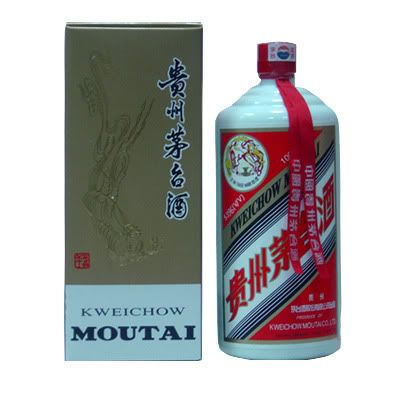
As America celebrates its 233rd birthday, I raise it a glass and give it a big 干杯(ganbei) of 白酒(Baijiu)!

Explanation?

From The Financial Times

Image from 21food.cn

Beijingers call the hot and sticky months of July and August the "sauna" season. On muggy summer evenings, sensible locals sweat it out in the capital's old lanes with sticks of fatty lamb kebab and cold bottles of Yanjing beer.

But real men roll up their T-shirts under their armpits, ditch the pansy lager, and instead glug down the local firewater known as baijiu - a potent mash of sorghum, rice, unhusked barley and other grains.

For foreign businessmen forced to drink the stuff at countless banquets, baijiu provides an infamous challenge for the unconditioned palate. But this white spirit - generally 40 to 60 per cent alcohol by volume - is a mainstay of Chinese culture, first popularised during the Xia dynasty 4,000 years ago.

Baijiu, the world's largest spirits category by volume, traditionally dominated the domestic booze market. But in recent years, sales volumes of China's national liquor declined as beer, a foreign upstart, gulped up market share.

Now baijiu-makers are fighting back with a proliferation of new, luxury varieties designed to appeal to the country's growing band of big spenders. Revenues are shooting up at major distilleries and the spirit is giving beer a run for its money.


Read On
Anyone who's been to a Chinese banquet knows the culture of baijiu. The Chinese are serious about this liquor.

My first experience with baijiu in China was a bad one. The people I was drinking with told me, "Have some Chinese wine!" Thinking that I'd be drinking something in the same vain as "wine," I was all for it. After my first glass was poured and the glasses around the table were raised, I didn't even bother smelling the fluid inside the small shot glass. As the "firewater" hit my mouth and throat, I nearly gagged.

"This is wine?!" I remember yelling as I was short of breath after my drink.

The Chinese around the table all laughed and immediately poured me another glass.

I don't need to get into the details of what ensued. You can easily guess. Let's just say the next day I had one of the worst hangovers of my life.

For the next couple years I was staunchly opposed to baijiu. Whenever I was at a wedding or event where people were drinking the stuff, I'd take a drink or two out of politeness but rarely ever imbibed any more than that.

My attitude changed towards baijiu changed last fall when my friend from America, Andy, came to visit me in Xi'an though. On our way out to travel out in Gansu, Andy and I bought a bottle to drink on the train. We then ended up having an absolutely excellent drunken time. A week or two later, we drank some more baijiu at the north peak of Hua Shan when we stayed at a guesthouse there. Another truly great experience.

So since those positive instances last fall, I'm totally fine with drinking baijiu. I can't say I do it that often, but when the occasion arises, whether it be a wedding or a house party, I'm happy to participate.

To America on its best holiday of the year, 干杯 and have a great day!

Friday, February 20, 2009

My Pingyao Article at Chinatravel.net

Chinatravel.net has made my article on the charming little town of Pingyao a "Travel Feature" on the site's front page.

From Chinatravel.net:


If you're traveling between Beijing and Xi'an, stop off at tiny Pingyao for a side trip that might just turn into a highlight. I don't believe there's another city in China that can match Pingyao's combination of a relaxed atmosphere and ancient Chinese architecture.

As my girlfriend Jackie put it at the end of our four days in Pingyao: "I don't think we could've come to a more lovely and romantic city than Pingyao." I couldn't agree with her more—much to my surprise.

After arriving at the train station, we expected to see a line of taxis waiting to take us into the heart of historic Pingyao. Instead, a row of motorized rickshaws sat waiting for our business.

The look in the drivers' eyes when we walked out of the train station was if they had just spotted breakfast. It was a cold, quiet Monday morning in the off season. They all began yelling "OK!" while frantically preparing their rickshaws for us.

Read On
As I say in the article, Pingyao is a very worthwhile trip if you are traveling around North China. Jackie and I had a very lovely time there just about a year ago. Sometime in the near future, I'll get some of the best pictures I took there back up to this blog.

Seeing that my old blog - blog.metabetable.com - bit the dust last year and I lost a lot of the links from it, I'm re-posting links to the published articles I've had on China.


Kashgar: The Far West of the Far East
Published by the website Chinatravel.net
This travel article is about the far west Chinese city of Kashgar, experiencing the weekly Sunday market in Kashgar, and the stunning Lake Karakul in the Pamir Mountain range. This article won the distinction of being one of the Top 10 travel articles published in 2008 at Chinatravel.net.


Hua Shan: Shaanxi's Sacred Mountain
Published in the Xi'an English language magazine China Grooves
This travel article is an account of climbing Hua Shan at night and watching the sun rise at the East Peak in the morning.


Helping Xi'an's Neediest One Bowl at a Time
Published in the Xi'an English language magazine China Grooves
This article tells the story of Tony Day and the work he's doing here in Xi'an. Tony started the first soup kitchen of its kind in China.

Now that I'm focusing at least half-hour a day to my blog, I haven't been writing much of anything outside of "Mark's China Blog" recently. This is unfortunate, but at the same time I'm happy with the way my blog is going.