I've traveled much more extensively in China than I have America. The people I've met, the things I've eaten, and the scenery I've witnessed in China are things that I'll never forget. China is a HUGE country that has MANY different opportunities for a traveler.
Seeing how many places I've been in China, it'd be prudent for me to publish a "Top 10 Travel Destinations in China" list. This is a subjective list of places that I enjoyed the most. So there is surely room for disagreement or discussion.

I'm going to make one qualifications before I present the list.
No metropolises are on my list. Places like Beijing, Shanghai, and, of course, Xi'an are all great cities. But this list is more focused on specific destinations and sites. I also prefer traveling to natural scenery as opposed to spending my vacation time walking down the skyscraper-laden streets of crowded cities. So while there are many worthwhile major cities in China worth visiting, I'm not including such places on my list.
To the list:
Mark's Top 10 Travel Destinations in China10. Dali, Lijiang, and Tiger Leaping Gorge (Yunnan Province) Scene at a lake in Lijiang
I was the sickest I've ever been in my life while visiting these three destinations. While in Lijiang, I made a major mistake; I ate a salad. The ensuing two weeks were hell. I eventually figured out I had giardiasis and fought the sickness with antibiotics.
The experience of being sick in Yunnan certainly tainted my experience there. I couldn't bike ride in Dali. I didn't hike the high trail of Tiger Leaping Gorge. I was able to walk around a lot in Lijiang, but I couldn't enjoy a lot of the fun things about the village.
Dali is a small village teeming with coffee shops, women in ethnic minority garb, and western hippies. It has an immensely laid back vibe.
Lijiang the perfect place to take a Chinese woman on a honeymoon.
Tiger Leaping Gorge is the deepest gorge in the world. From what I hear, the views from the high trail are more than worth the hike.
Although I was deathly ill in Yunnan, I could tell that it would've been a joy if I'd been healthy.
9. Pingyao (Shanxi Province) An alleyway in Pingyao
I wrote a detailed article about my experience in Pingyao
here. It's something of an enigma: an oasis of Chinese history and modern travel comfort all the while being dead in the middle of China's coal country. Just walking down the streets here is an experience. Be sure to eat the local specialty - 土豆烧牛肉 (beef and potatoes).
8. The German Concession and the Beaches of Qingdao (Shandong Province) The German section of Qingdao
I spent ten days in Qingdao by myself in the summer of 2006. I'm pretty sure it was in Qingdao that I realized I don't really like traveling by myself. Saying that, Qingdao is worth a visit.
Qingdao has a lot more character than most big cities in China. To me, it seemed as though there was the German concession area built a hundred years ago, the new skyscraper section of the city, and practically nothing in between the two.
Walking through the winding hills of the German section and the summer beaches with hundreds of swimmers are things you'll remember.
 A beach with modern Qingdao in the background7. Heaven Lake and Turpan (Xinjiang Autonomous Region)
Heaven Lake and Turpan aren't that close to each other. I'm lumping them together because they are both a couple hours (in opposite directions) from Urumqi, the capital of Xinjiang Autonomous Region.
 Heaven Lake
Heaven Lake is what I have always pictured western Canada to look like. Heaven Lake is at an elevation of 6,500 feet and the mountains surrounding the lake tower over 20,000 feet. My brother and I camped out at the lake for one night in the summer of 2007. Although we were there in the summer during peak season, once we started walking along the paved trails, we had the place to ourselves. We hardly saw anyone. Setting up camp, eating, and lugging around heavy backpacks was a very serene day.
 Me and my brother riding camels outside of Turpan
A couple days after going to Heaven Lake and taking a day to rest in Urumqi, my brother and I headed to Turpan. Turpan is an old desert oasis town along the Silk Road. It is littered with old sites and relics thousands of years old. It is HOT in Turpan. But eating in the night markets, seeing the old sites, and getting intimate with the small Muslim town is well worth being hot for a couple days.
6. The Great Wall from Jinshanling to Simatai (Beijing) We were lucky enough to see a rainbow while at the wall
Jinshanling and Simatai are THE places to see the Great Wall. I've been to the Mutianyu section of the wall. It wasn't bad. But it paled in comparison to Simatai.
Jinshanling to Simatai is difficult. The beginning of the hike is about three hours by bus from Beijing (much further than any of the other sections) and it is steep. One must be prepared for a very grueling hike. In fact, I'd say only healthy people should attempt this section the wall. But the payoff for the hard work is sublime. Be sure to spend 35 kuai and ride the zip line at the end section.
5. Emei Shan (Sichuan Province) Me, with a monkey on my back
My brother and I refer to Emei Shan as "Monkey Mountain." Talk about a mystical place.
At Emei Shan, one can run across wild monkeys, see some of the most pristine forests in China, see Daoist hermits making pilgrimage, stay in practicing Daoist monasteries, hike some of the most grueling paved trails I've ever seen, and see summits thousands and thousands of feet above ground (and the clouds).
Because we were only at Emei Shan for two days and one night, my brother and I didn't even make it to the (what I hear is) beautiful summit of Emei Shan. Even though we didn't see the entire mountain, climbing half the mountain is, by far, one of the most memorable things I've ever done.
4. Xiahe and the Labrang Monastery (Gansu Province)

My friend, Andy, two French tourists, and I were the first foreigners to visit Xiahe and the Labrang Monastery in months and months last October. The city had been closed since the riots that took place in the run up to the Olympics. Locals in the city told me they hadn't seen foreigners in months before us.
The story of how we got to the city is, indeed, unbelievable.
It involves being denied tickets on a public bus. Finally convincing the ticket sellers to let us get on the bus. Being stopped at a military check point at the outskirts of the city. Having armed guards (with massive guns) run on to the bus and bark Chinese at us (and particularly me since I was the only one of us who could speak Chinese). Being told by a slick, English-speaking government official that we were NOT supposed to be in Xiahe. And ultimately negotiating an agreement where we could see the Labrang monastery as long as we stayed where the government wanted us to, didn't leave our hotel once we got there, went straight to the monastery at 8AM the following morning, left the monastery at noon, and then left Xiahe before sundown the following day.
Yeah, it was intense. I saw a locked down and repressed community first hand.
Despite the drama of geting to Xiahe, we did end up getting to the Labrang Monastery, the most holy Tibetan monastery outside of the Tibetan Autonomous region. Thankfully, once we finally got lost in the maze of Xiahe's narrow streets, the Tibetan monks, Tibetan pilgrims, and Chinese tourists roaming the streets couldn't have been friendlier.
The highlight was being invited in by a monk into his personal residence. As Andy and the two French tourists we were with walked into the small hut, we heard monks chanting and could smell incense burning. Since I was the only person who spoke Chinese, I acted as translator for the four of us and him. We had tea and relaxed with him for about a half hour.
Getting to spend time with a monk given the situation in Xiahe and the monastery was a once-in-a-lifetime experience. It's something I will never forget.
3. Yangshuo and Longji Rice Terraces (Guangxi Province) Just outside of Yangshuo
I can't believe that there is a more beautiful place on Earth than Yangshuo. Its terrain is unworldly.
Yangshuo is all about the scenery. Get out and enjoy it any way you can. Go on bamboo rides on the Yulong River. Rent a bike. Rock climb (it's supposedly the best place in China to climb).
 The Longji Rice Terraces
While taking a break from adventures in and around Yangshuo, take a day trip to the Longji rice terraces. Built over hundreds of years, they are just magnificent trophies of human achievement.
2. Kashgar and Karakul Lake (Xinjiang Autonomous Region) A scene from the Sunday market
If you've been putting off a trip to Kashgar, go now. The old city is presently
being razed. Once it is gone, a true relic of Uighur culture will be forever lost.
One of the big highlights of Kashgar is its weekly market. I was blown away by the event. Thousands upon thousands of Xinjiangese from Kashgar and the areas surrounding Kashgar descended up the outskirts of town to trade goods in one market and livestock in another. These markets and the old city of Kashgar do not feel like China at all.
Incredibly, a natural scene unlike any other I've ever seen is just a few hours by car from Kashgar: Karakul Lake.
 Me at Karakul Lake
Karakul Lake is at 13,000 feet and is surrounded by 25,000 foot mountains in all directions. That pretty much says it all. Pictures don't do this place justice. Camping here with my brother in 2007 was just... I've run out of superlatives.
The exotic feel of Kashgar with Karakul Lake not too far away make for a truly one-of-a-kind travel destination.
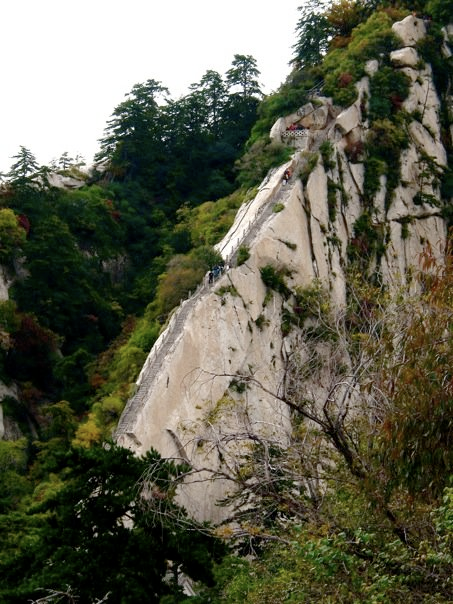
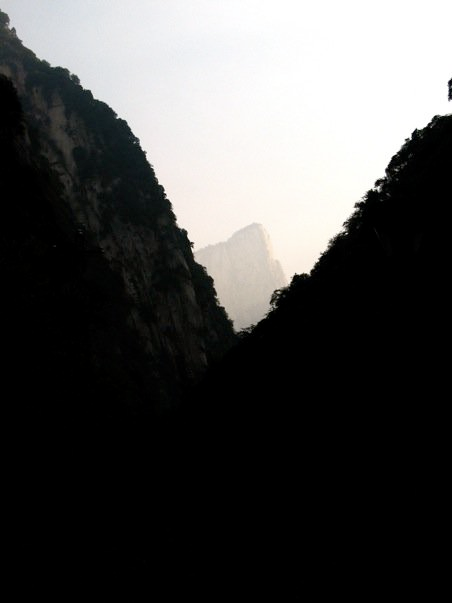
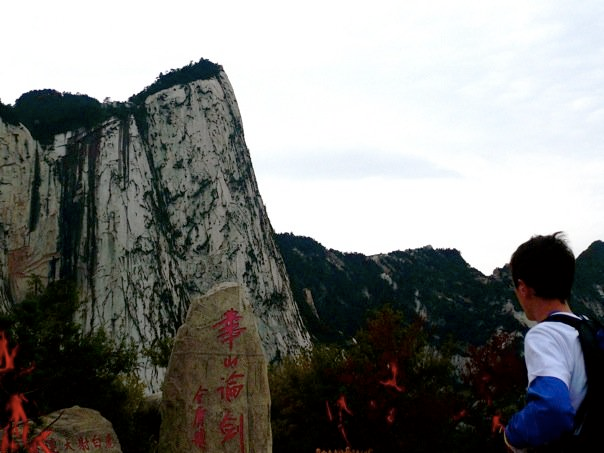
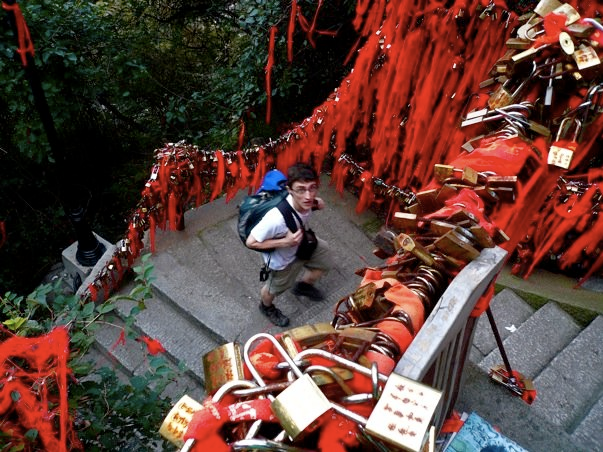
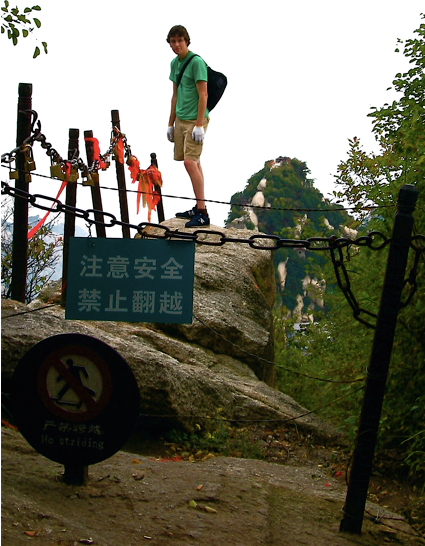
1. Hua Shan (Shaanxi Province) Above the clouds at Hua Shan
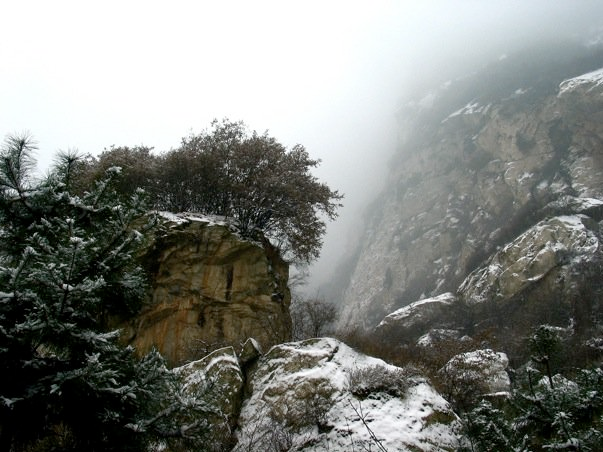
After just writing about Kashgar and Karakul Lake, I feel like objectively they are "cooler" places than Hua Shan, a mountain a couple of hours east of Xi'an. But Hua Shan has some kind of special pull for me. I've climbed atop Hua Shan three times. Each one more intense than the last.
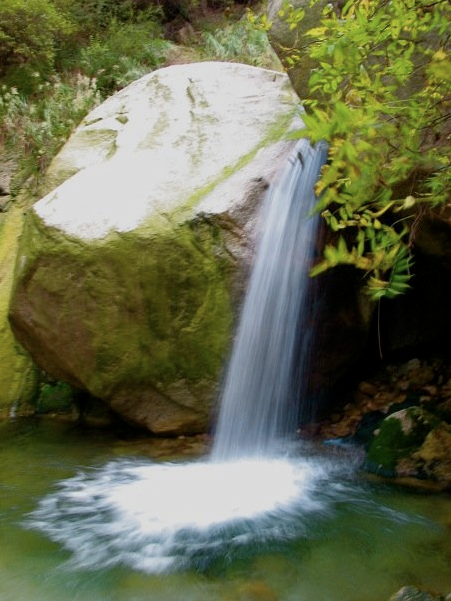
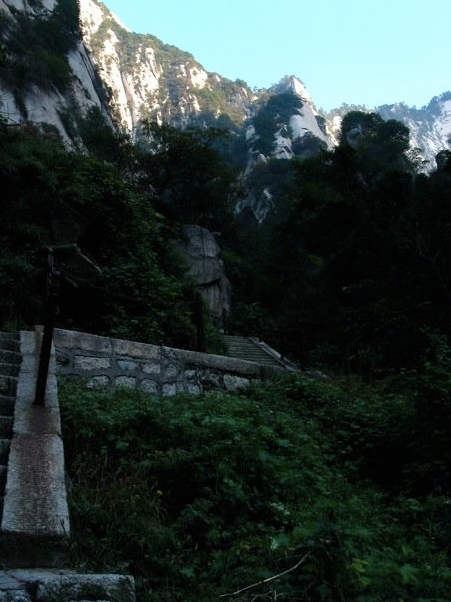
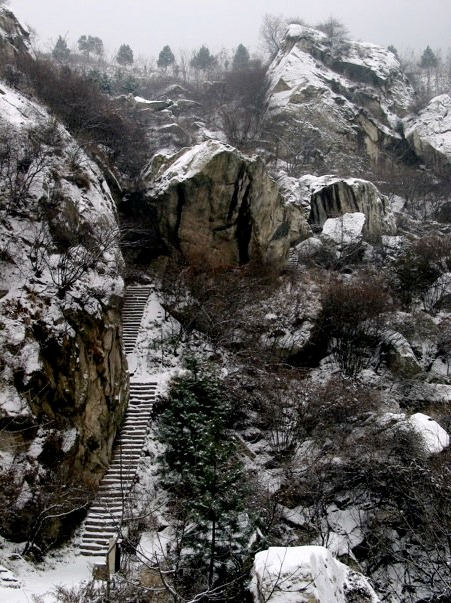
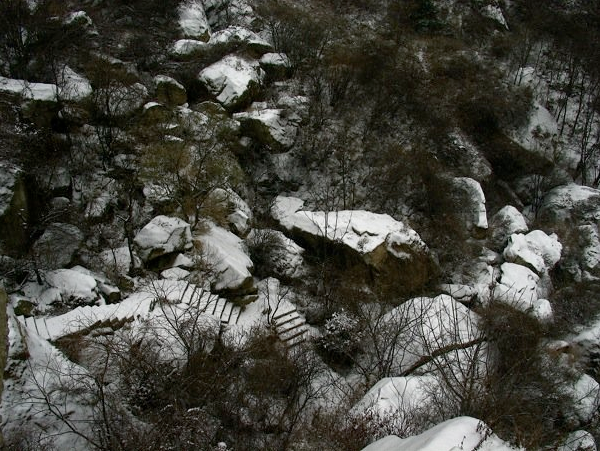
I don't know what it is about climbing the thousands upon thousands of steps that take one to the top of Hua Shan, one of the five Daoist holy mountains in China. All I do know is that I've never been to a place more magical than the place.
Compiling this list was fun. I really enjoyed thinking about all of the great places I've traveled in China. I can't wait until I can get back out to China to do some more!








 Posts
Posts


